

 EN

755nm-vs-808nm-vs-1064nm-choosing-a-hair-removal-wavelength, 755nm-vs-808nm-vs-1064nm-choosing-a-hair-removal-wavelength, /blog
EN
Choosing between 755nm, 808nm, and 1064nm means matching light absorption and penetration to the client, hair, and treatment area. A diode laser hair removal machine may offer one wavelength or several, but a wavelength label alone does not establish suitability. The best decision considers the intended client profile, operating parameters, cooling, and the provider’s training.
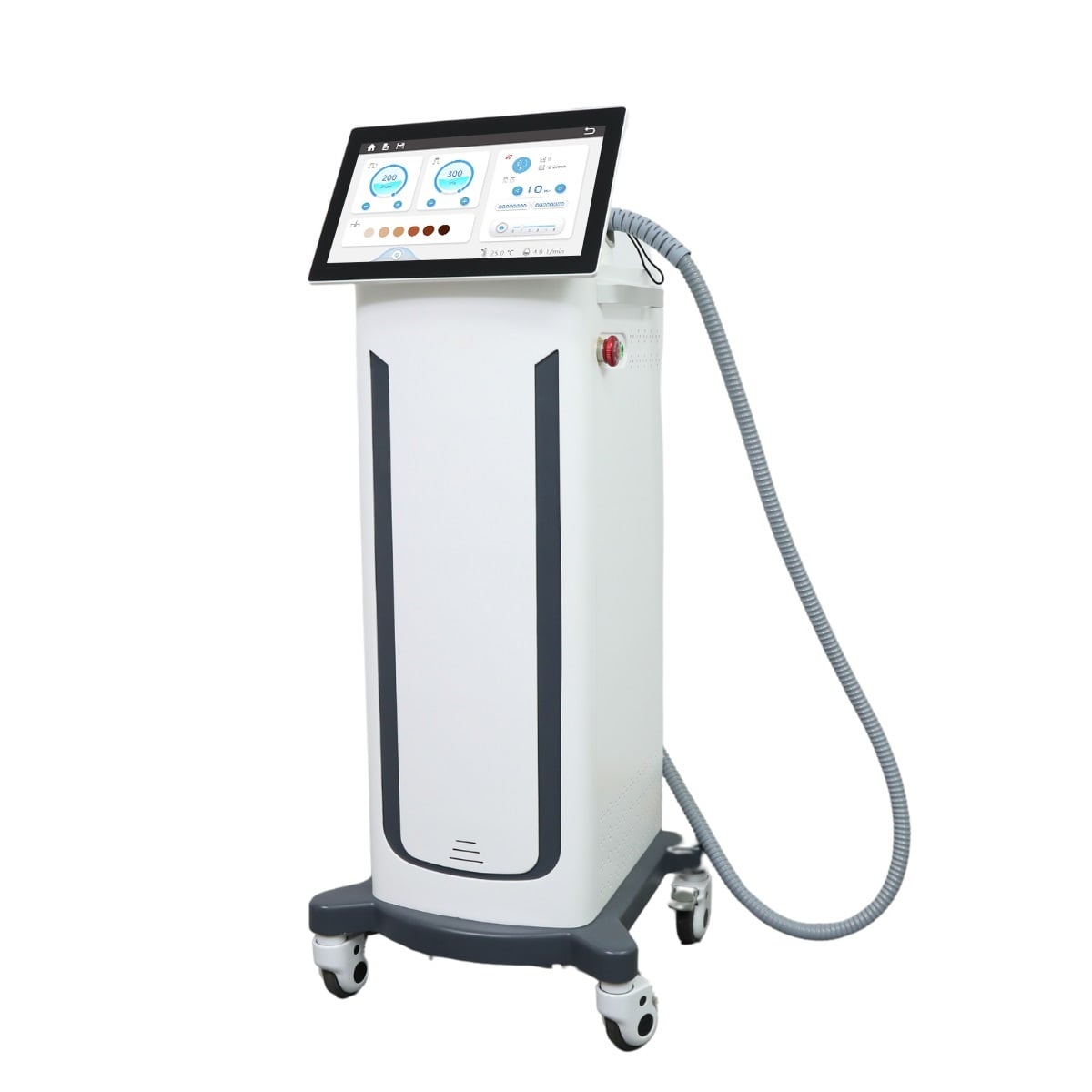
In broad terms, 755nm is often considered when targeting lighter, finer hair; 808nm is a widely used middle-ground wavelength; and 1064nm reaches deeper with comparatively lower melanin absorption near the surface. These are selection starting points, not treatment guarantees. A hair removal laser should be assessed as a complete system, while an 808nm diode laser or professional hair removal device must be evaluated against the same practical criteria.
Hair reduction depends on delivering heat to pigment in the hair while managing heat in surrounding tissue. A hair removal laser uses light that melanin absorbs to varying degrees, and wavelength affects both absorption and how deeply light can travel. The diode laser hair removal machine therefore needs settings suited to skin tone, hair characteristics, and body area rather than a single universal setting.
At 755nm, melanin absorption is relatively strong, which can be useful for lighter, finer hair when the client and protocol are appropriate. This same interaction calls for careful assessment of skin pigmentation and conservative parameter selection. A professional hair removal device should support controlled adjustments and reliable cooling; those features matter alongside wavelength when a practitioner selects a hair removal laser.
Skin tone and recent tanning affect how much energy the epidermis may absorb. Hair color, thickness, density, and growth stage also influence the response, while facial, underarm, and leg areas differ in sensitivity and hair pattern. An 808nm diode laser can provide a useful option across many common treatment plans, but the diode laser hair removal machine still requires an assessment for each client.
A practitioner should review relevant history, explain realistic expectations, and follow the device instructions before treatment. A professional hair removal device does not replace screening, eye protection, patch testing where indicated, or trained operation. The hair removal laser selection is strongest when wavelength, pulse duration, energy, spot size, and cooling are considered together rather than treated as interchangeable specifications.
The 755nm option is often discussed for clients with lighter skin and finer, less coarse hair because pigment can absorb this wavelength effectively. That advantage also means providers must pay close attention to epidermal pigmentation and treatment settings. When comparing a hair removal laser, consider whether the intended client base makes this wavelength useful and whether the diode laser hair removal machine offers sufficient control for cautious protocols.
Wavelength should not be treated as a promise of results or comfort. Hair cycles, consistency of appointments, treatment area, and individual biology all matter. An 808nm diode laser may be a more versatile central option for a practice with varied clients, while a professional hair removal device with 755nm can add a wavelength for specific assessed cases.
The 808nm wavelength is commonly selected as a practical balance between melanin absorption and penetration. An 808nm diode laser may suit many routine treatment plans, particularly where hair is darker and coarser, but suitability still depends on client evaluation and settings. Check that the hair removal laser provides clear parameter guidance and that the diode laser hair removal machine can be operated within its intended use.
The 1064nm wavelength generally penetrates more deeply and is absorbed less by epidermal melanin than shorter wavelengths, so trained providers may consider it for darker skin tones. It is not risk-free, and correct settings and cooling remain essential. A professional hair removal device that includes 1064nm can expand planning options, while an 808nm diode laser remains relevant for other cases; neither removes the need for individualized judgment.
Start with the clients and treatment areas the practice actually serves. A clinic mainly treating darker, coarse hair may value an 808nm diode laser, while a broader mix of skin tones can make multiple wavelengths useful. For a diode laser hair removal machine, review whether the available wavelength configuration aligns with that profile, and do not pay for options that staff cannot use safely or appropriately.
Review the complete operating system, including pulse controls, spot size, cooling, user interface, maintenance expectations, and documented safety information. A professional hair removal device should support consistent workflows without encouraging one setting for every client. Also consider staff training, consultation time, treatment-room procedures, and how the hair removal laser will fit existing protocols.
Ask for technical documentation that explains wavelength output, applicable operating ranges, cooling method, and required maintenance. Confirm how the device is intended to be used and what training is available. A diode laser hair removal machine should be assessed on documented capabilities rather than headline wattage alone, and a professional hair removal device must fit local requirements and the clinic’s safety processes.
A useful selection process connects each wavelength to a defined client scenario, then checks whether the equipment and practitioner can support that scenario. A hair removal laser should be paired with screening, protective eyewear, clear consent, and post-treatment guidance. If the system offers more than one wavelength, establish how staff decide between them and how they record settings, response, and follow-up.
No single wavelength is best for every client or practice. An 808nm diode laser is a widely used option, but skin tone, hair traits, treatment area, and safe operating parameters influence suitability. A clinic should choose a diode laser hair removal machine based on its service profile and trained staff, not wavelength popularity alone.
A trained provider may consider 1064nm for certain darker skin tones because its lower epidermal melanin absorption can be relevant to planning. This does not make treatment automatically safe or suitable. Assess the client, follow device guidance, and ensure the professional hair removal device supports controlled use. The hair removal laser protocol should account for the individual and treatment area.
No. Multiple wavelengths increase available choices, but they do not replace consultation, skin and hair assessment, or operator training. A diode laser hair removal machine must be used within its instructions, and each wavelength requires appropriate settings and precautions. An 808nm diode laser may fit one case while another wavelength is considered for a different client. A professional hair removal device supports the workflow; it does not make clinical decisions.

