

 EN

common-mistakes-with-fiber-retraction-speed-in-endolaser-work, common-mistakes-with-fiber-retraction-speed-in-endolaser-work, /blog
EN
Fiber retraction speed represents one of the most overlooked technical parameters in endolaser procedures, yet it directly influences treatment safety, efficacy, and tissue response. Many practitioners focus heavily on power settings and wavelength selection while underestimating how quickly or slowly the laser fiber retracts from treated tissue. An endolaser system requires precise calibration of withdrawal speed to optimize results and prevent complications. This article explores the critical mistakes that compromise endolaser treatment outcomes and provides actionable guidance for clinicians managing minimally invasive laser device applications.
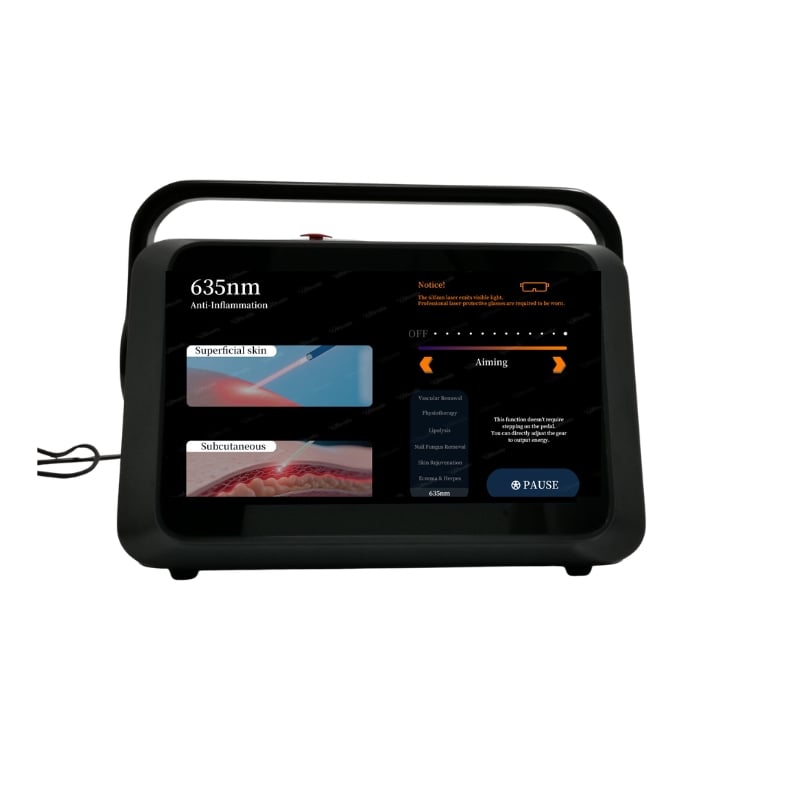
Endolaser treatment success depends on understanding how fiber speed interacts with tissue absorption, thermal diffusion, and coagulation depth. When practitioners rush fiber withdrawal or move it too slowly, they create zones of inconsistent energy delivery that lead to inadequate results or thermal injury. A minimally invasive laser device demands technical precision that goes beyond selecting the right power level; it requires mastery of mechanical workflow. Fiber retraction speed mistakes often remain invisible until tissue damage manifests clinically, making prevention through education essential for all practitioners deploying laser lipolysis fiber systems.
Fiber retraction speed determines the residence time of laser energy at each tissue plane during withdrawal. When using a minimally invasive laser device for endolaser treatment, the fiber tip delivers concentrated thermal energy in a confined space. The speed at which you withdraw the fiber directly controls how much cumulative energy reaches each millimeter of tissue. Slower withdrawal means longer exposure time per unit length, increasing heat accumulation and coagulation depth. Faster withdrawal reduces exposure time, creating shallower thermal zones and potentially inadequate coagulation. This balance is not arbitrary; it reflects fundamental laser-tissue interaction physics that governs safety and efficacy in laser lipolysis fiber applications.
Most endolaser manufacturers specify a retraction speed range, yet many practitioners use these recommendations without adjusting for actual clinical conditions. Tissue density, hydration status, pigmentation, and fibrosis all influence how quickly energy penetrates and spreads thermally. A speed that works perfectly in loose subcutaneous fat may cause thermal runaway in dense fibrous tissue. Many minimally invasive laser device operators apply manufacturer defaults uniformly across all patient presentations, ignoring the fundamental principle that tissue heterogeneity demands adaptive technique. This one-size-fits-all approach accounts for a substantial portion of endolaser treatment failures and complications reported in clinical practice.
The most prevalent mistake is retracting the fiber too quickly during endolaser treatment. Practitioners often accelerate fiber withdrawal to reduce procedure time, assuming faster work equals greater efficiency. In reality, rapid withdrawal creates a fragmented pattern of energy deposition with gaps in coagulation between exposure points. Laser lipolysis fiber systems deployed at excessive speeds produce incomplete fat necrosis, poor hemostasis, and inadequate tissue contraction. Patients return with incomplete results requiring revision procedures. An endolaser operator must resist the temptation to rush; controlled, measured withdrawal ensures continuous energy delivery that creates uniform zones of cellular damage and thermal coagulation. Many minimally invasive laser device systems now include motorized pullback mechanisms to standardize speed, yet manual techniques remain common in resource-limited settings.
Conversely, retracting the fiber too slowly during endolaser work creates excessive heat buildup that extends beyond the intended treatment zone. Slow withdrawal in laser lipolysis fiber applications causes cumulative thermal injury to surrounding structures, including skin, nerves, and blood vessels. A minimally invasive laser device operated with inadequate pullback speed transforms a precision tool into a blunt thermal instrument, increasing risk of burns, nerve injury, and prolonged inflammation. The treating physician may not observe deep thermal damage during the procedure; complications emerge over days or weeks as tissue necrosis progresses. This mistake often occurs when practitioners compensate for low power settings by holding the fiber stationary or moving it minimally, fundamentally misunderstanding how endolaser systems should be adjusted.
Many endolaser treatment failures result from variable withdrawal speed rather than incorrect speed per se. Operators may begin with appropriate speed, then decelerate when encountering resistance, or accelerate through easier tissue planes. This inconsistency creates zones of different thermal penetration within a single treatment area. Laser lipolysis fiber applications require consistent mechanical discipline; the fiber should follow a predetermined speed profile that remains stable regardless of tissue variation. A minimally invasive laser device demands reproducible technique; practitioners who adjust speed reactively rather than proactively undermine the predictability that makes endolaser treatment safe and effective. Inconsistent speed also complicates troubleshooting; when results disappoint, practitioners cannot distinguish between inadequate power, wrong wavelength, improper speed, or tissue variation.
Effective endolaser practice begins with establishing baseline fiber retraction speeds that match your specific laser system and typical patient presentations. Consult your minimally invasive laser device manufacturer specifications, then validate these parameters through supervised case experience. Most endolaser systems operate effectively with withdrawal speeds between 1 to 3 millimeters per second, though this range varies by wavelength, power, and fiber diameter. Laser lipolysis fiber protocols should document your chosen baseline speed and the clinical rationale supporting it. Record baseline speed in your case notes; this documentation allows you to correlate speed settings with outcomes, enabling continuous refinement. An endolaser operator who understands the 'why' behind speed selection gains the foundation needed to adapt safely when encountering unusual tissue characteristics or challenging anatomical presentations.
Advanced endolaser practice incorporates real-time tissue assessment that informs speed decisions. Dense, fibrotic tissue requires slightly faster withdrawal to prevent excessive thermal penetration, while loose, fatty tissue may benefit from slightly slower withdrawal to ensure complete coagulation. A minimally invasive laser device operator should develop palpation and visual assessment skills that identify tissue density before deploying the laser. Laser lipolysis fiber work becomes more predictable when practitioners treat tissue characteristics as variables that legitimately influence technique. Many endolaser complications arise because operators fail to modify technique for tissue variation, instead rigidly adhering to a single speed regardless of conditions. Building flexibility within a disciplined framework represents advanced practice; you maintain consistent speed discipline while calibrating the baseline speed to match the tissue you encounter.
Modern minimally invasive laser devices increasingly use motorized fiber pullback systems to maintain a consistent withdrawal speed. Operators can program the speed while focusing on fiber positioning and treatment pathways. Automated pullback reduces technique variation between practitioners, supporting more consistent results. When available, motorized systems can improve procedural control and reduce operator-dependent variability. If automation is unavailable, applying the same principle of steady, controlled fiber movement can make manual treatment more consistent.
Signs of excessive fiber withdrawal speed include incomplete fat necrosis, inadequate hemostasis with prolonged oozing, and patient dissatisfaction with minimal contraction or tightening. During the endolaser treatment, you may notice that tissue surrounding the fiber pathway appears inadequately coagulated. Follow-up imaging or ultrasound may reveal gaps in the treatment zone where adipose tissue remains intact. Laser lipolysis fiber systems deployed too quickly create a 'skip pattern' that becomes apparent clinically within 2 to 4 weeks post-procedure. If your minimally invasive laser device outcomes show this pattern consistently, reduce your baseline withdrawal speed by 0.5 mm/second and observe whether results improve.
Slow fiber withdrawal during endolaser treatment causes thermal injury extending beyond the intended zone, leading to prolonged inflammation, skin burns, nerve injury, and delayed wound healing. Patients may report persistent pain, discomfort that worsens days after the procedure, or numbness indicating nerve thermal injury. Laser lipolysis fiber systems operated with inadequate pullback speed create zones of tissue necrosis that are not immediately visible; complications emerge as inflammatory responses peak around post-operative day 3 to 5. A minimally invasive laser device used with excessive residence time at each tissue depth can damage structures deep to the treatment field, including motor nerves and blood vessels. Early recognition of this complication pattern should prompt immediate reduction in fiber residence time for subsequent cases.
No, while maintaining a consistent baseline speed discipline is essential, tissue variation and anatomical differences justify modest speed adjustments between patients and between different regions in the same patient. Endolaser practice recognizes that loose subcutaneous fat behaves differently from dense fibrous tissue; a minimally invasive laser device requires speed calibration that matches the tissue being treated. Laser lipolysis fiber applications benefit from practitioners who assess tissue density preoperatively and adjust baseline speed accordingly. However, these adjustments should be deliberate and documented, not reactive or random; an endolaser operator should articulate the specific tissue characteristic that prompted the speed change. This principled approach to individualization, grounded in tissue assessment rather than operator preference, produces more consistent and safer outcomes.

