

 EN

exploring-piezoelectric-focusing-in-focused-shockwave-devices, exploring-piezoelectric-focusing-in-focused-shockwave-devices, /blog
EN
Piezoelectric focusing is the energy-generation principle behind some focused shockwave therapy systems. Understanding how it works helps clinicians and equipment teams connect the device’s internal design with treatment planning, including how energy is concentrated, adjusted, and directed toward a selected tissue depth.
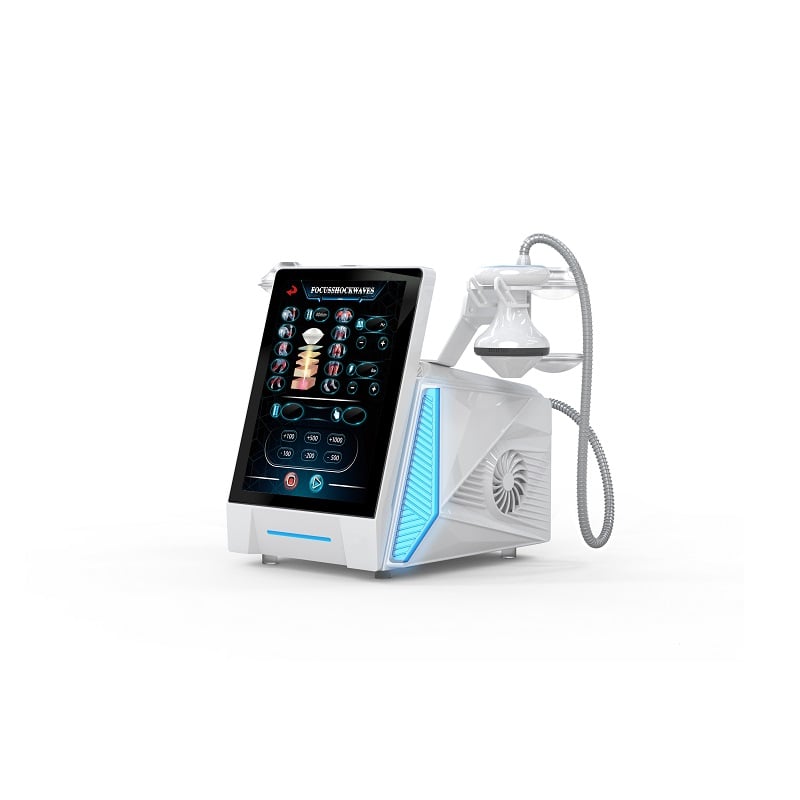
Unlike a broad pressure wave, a focused field is designed to converge within a target zone. In an extracorporeal shockwave system, that focus depends on the source geometry and operating settings, not simply on the applicator touching the skin. This distinction matters when assessing a focused shockwave device for orthopedic rehabilitation or another clinical service.
A piezoelectric source uses elements that change shape when voltage is applied. Their rapid motion produces acoustic pulses, and the arrangement of the elements directs those pulses toward a focal region. In focused shockwave therapy, this conversion and geometry together determine how energy is concentrated beyond the applicator surface.
The elements are commonly arranged along a curved surface or configured to create a converging wavefront. As pulses travel through the coupling medium and tissue, their paths meet around a defined focal area. An extracorporeal shockwave treatment therefore involves more than a strong surface sensation; the intended effect depends on energy reaching the selected region.
A focused shockwave device may allow operators to adjust energy level, pulse frequency, or treatment protocol according to its design. These controls do not change the basic piezoelectric principle, but they affect how the source is used. Clinicians should distinguish a device’s available settings from a clinical decision about which settings suit a particular patient.
The focal zone has dimensions rather than being a single point. Its location and shape influence the treatment area, so focused shockwave therapy requires attention to both anatomy and applicator placement. Accurate coupling is also important: an air gap or poor contact can interfere with transmission and make delivery less predictable.
For orthopedic rehabilitation, clinicians consider the suspected tissue, the depth of the target, patient tolerance, and the treatment objective. The label extracorporeal shockwave describes energy delivered from outside the body; it does not by itself establish that a specific protocol is appropriate. Assessment and clinical judgment remain central to safe use.
Before treatment, the operator should review the clinical indication, identify the target area, and confirm that the system’s focal characteristics are suitable. A focused shockwave therapy plan should specify the intended region and explain how the clinician will monitor response. The settings on a focused shockwave device support that plan; they should not replace it.
Energy level and pulse frequency are often among the adjustable parameters, although control ranges vary by model. Clinicians should follow the device instructions, relevant training, and applicable clinical guidance when selecting settings. With extracorporeal shockwave, starting conservatively and considering tolerance can help structure an individualized session without assuming that more energy is always better.
Positioning is another practical step. The clinician locates the target using the assessment method appropriate to the case, applies suitable coupling, and places the applicator so the intended focus aligns with the treatment region. In focused shockwave therapy, consistent positioning supports repeatable delivery, while careful communication helps the patient report discomfort promptly.
During a session, the operator observes patient response and checks that the applicator remains coupled and correctly positioned. A focused shockwave device may make parameter changes available, but any adjustment should have a clinical reason and remain within authorized operating guidance. Clear notes on settings, location, and tolerance make follow-up more useful in orthopedic rehabilitation.
Routine workflow should include inspection of the applicator and cables, confirmation of the selected program, and attention to cleaning and maintenance instructions. These checks do not measure clinical effectiveness, but they help ensure the system is ready for use. Teams should also understand how the device indicates output and what its displays do not tell them.
An extracorporeal shockwave system cannot compensate for an uncertain diagnosis or poor target selection. Patient factors, tissue depth, contraindications, and expectations all influence whether treatment is suitable. In orthopedic rehabilitation, the modality is best considered within a broader plan that may include load management, exercise, and reassessment rather than as a stand-alone solution.
For a service evaluating focused shockwave therapy, piezoelectric focusing is one design consideration among several. Teams can review the intended applications, focal depth information, available energy settings, training requirements, and service needs. Comparing these details with the clinic’s patient population is more useful than choosing on a single specification alone.
A focused shockwave device should fit the room, workflow, and staff competency as well as the clinical purpose. Consider how easily operators can position the applicator, understand controls, document sessions, and maintain consistent protocols. These practical factors shape daily use and help a clinic integrate extracorporeal shockwave into existing care pathways responsibly.
Patient communication should explain what the procedure involves, the expected sensations, and the reason for selecting it. In orthopedic rehabilitation, clinicians can set realistic expectations and describe how response will be reviewed over time. Focused shockwave therapy is not a promise of a particular outcome; suitability and progress differ among individuals and conditions.
Follow-up turns treatment into a learning process. Clinicians can record the treated site, parameters, patient tolerance, and relevant changes in function, then use that information during reassessment. For extracorporeal shockwave, consistent records support continuity across visits and make it easier to judge whether the plan should continue, change, or be reconsidered.
Ultimately, piezoelectric focusing explains how a source can concentrate acoustic energy, while clinical reasoning determines whether and how to use it. A focused shockwave device is most useful when its focal characteristics are understood, its controls are applied within guidance, and the procedure has a defined role in orthopedic rehabilitation. That link between mechanism and workflow is the practical value of understanding the technology.
It describes the use of electrically responsive elements to generate acoustic pulses that converge toward a focal region. In focused shockwave therapy, the source design helps define where energy is concentrated, while the clinician determines whether the target and protocol are appropriate.
Extracorporeal shockwave is a broad term for shockwave energy delivered from outside the body. A focused shockwave device is designed to concentrate energy in a target zone, whereas other systems may distribute energy differently. The treatment approach depends on system design and clinical purpose.
No. Orthopedic rehabilitation plans depend on diagnosis, patient factors, treatment goals, and clinical guidance. Focused shockwave therapy may be considered when suitable, but equipment settings alone cannot establish suitability. A qualified clinician should assess the case, explain options, and monitor the response.

