

 EN

exploring-return-electrode-physics-inside-tecar-therapy-systems, exploring-return-electrode-physics-inside-tecar-therapy-systems, /blog
EN
Inside a TECAR system, the return electrode is more than a passive accessory: it completes the electrical path that makes treatment possible. Understanding tecar therapy alongside capacitive resistive electric transfer helps clinicians interpret how current travels through tissue and why electrode placement matters.
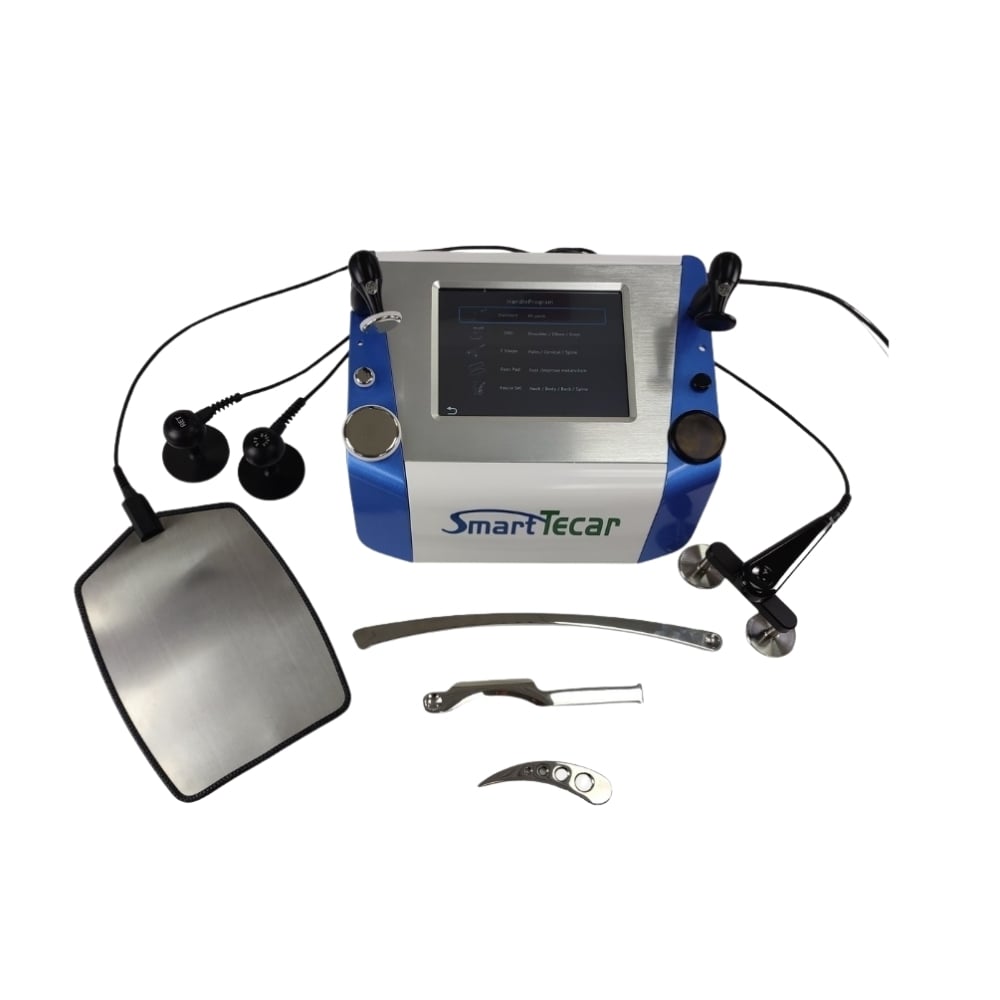
The return electrode does not simply draw energy out of the body. In a radiofrequency therapy device, it closes a circuit with the active applicator, while deep heat therapy describes one possible treatment effect rather than a separate current pathway. This distinction makes the system easier to understand and operate thoughtfully.
In tecar therapy, the active electrode delivers high-frequency alternating current to the treatment region, and the return electrode provides the route back to the generator. Capacitive resistive electric transfer describes an approach that changes how energy couples into tissues; it does not remove the need for a closed circuit.
The system’s output depends on the full electrical loop, including the generator, connecting leads, applicator, patient interface, and return plate. A radiofrequency therapy device therefore needs reliable contact at both electrodes, while deep heat therapy should be understood as a possible response to delivered energy, not an automatic outcome.
Current density is not identical at every point in that loop. Contact area, tissue geometry, electrode spacing, and local impedance affect how energy is distributed. When clinicians use tecar therapy, capacitive resistive electric transfer settings should be considered together with electrode positioning and the patient’s feedback.
A return plate with broad, even contact can help avoid unintended concentration at a small edge or gap. In a radiofrequency therapy device, skin preparation and secure placement are practical checks; deep heat therapy is not a reason to overlook comfort, contact quality, or the manufacturer’s operating instructions.
The return electrode’s role remains electrical even when patients perceive warmth beneath the active applicator. Capacitive resistive electric transfer involves tissue impedance and electrode coupling, so tecar therapy should be delivered with a clear understanding of the circuit rather than by assuming the return plate directly targets one structure.
Placement should account for the treatment region, patient position, and a comfortable path between electrodes. With a radiofrequency therapy device, a clinician should check that cables are arranged without pulling or crossing awkwardly. Deep heat therapy sensations can vary, so communication remains part of safe, controlled application.
Capacitive and resistive modes describe different coupling conditions, influenced by electrode construction and the tissues in the current path. In tecar therapy, selecting a mode is a clinical decision, not a claim that one setting reaches a fixed depth. The circuit still includes both active and return electrodes.
Tissues differ in water content, composition, thickness, and impedance, and those properties can change the electrical conditions encountered along the pathway. A radiofrequency therapy device converts its output into an interaction with this variable load; deep heat therapy should not be treated as uniform heating across every tissue layer.
Capacitive resistive electric transfer is useful language for discussing the system’s operating principle, but it does not specify an identical response for every patient. During tecar therapy, applicator movement, contact pressure, treatment duration, and selected output all influence the experience and should be managed within clinical judgment.
Output level is only one part of treatment delivery. Clinicians also consider the applicator’s movement, how consistently it contacts the skin, and how the patient describes sensation. A radiofrequency therapy device should be adjusted progressively according to its instructions; deep heat therapy is not a target that justifies ignoring discomfort.
As the active head moves, the location and distribution of energy change, while the return electrode continues to complete the circuit. Capacitive resistive electric transfer therefore requires attention to both contact points. In tecar therapy, communication helps distinguish expected warmth from excessive or unusual sensation that warrants reassessment.
The patient’s position can affect access, contact stability, and the clinician’s ability to move the applicator smoothly. A radiofrequency therapy device works within those practical conditions, not apart from them. Deep heat therapy may be discussed as a treatment sensation, but should not replace assessment of comfort and response.
Before starting, inspect the return plate and its connection, confirm that the contact surface is clean and intact, and position it securely according to the system instructions. Capacitive resistive electric transfer depends on a completed path, so tecar therapy setup should include checks beyond the active applicator alone.
A detached lead, uneven contact, or poorly supported plate can interrupt the intended workflow and affect the patient’s experience. With a radiofrequency therapy device, pause to correct setup concerns instead of compensating by increasing output. Deep heat therapy should never be used as a substitute for checking electrode contact.
Explain the purpose of both electrodes before treatment, including why the return plate may be positioned away from the active treatment area. This helps patients understand tecar therapy as a circuit-based process. Capacitive resistive electric transfer can then be described clearly without implying that the return electrode independently creates a therapeutic effect.
Warmth is one possible sensory response, not a complete measure of tissue response or treatment success. A radiofrequency therapy device delivers energy through a circuit whose conditions vary; deep heat therapy should be interpreted alongside the patient’s report, the treatment goal, and the clinician’s assessment.
When a patient reports sharp, burning, or otherwise unexpected discomfort, reduce or stop application and reassess electrode contact and settings. In tecar therapy, capacitive resistive electric transfer does not eliminate the need for observation. Follow the device instructions and applicable clinical protocols when deciding whether to continue.
Recording electrode placement, mode, output, duration, and patient response can make later sessions easier to interpret. This is particularly useful when a radiofrequency therapy device is used across changing treatment regions. Deep heat therapy language should remain precise, distinguishing a reported sensation from a verified tissue effect.
For clinicians reviewing a system’s features, the tecar platform should be evaluated through its electrode design, operating guidance, and workflow fit. Capacitive resistive electric transfer is most useful as a framework for understanding circuit behavior, not as a guarantee of a particular clinical result.
The return electrode completes the electrical circuit; it is not normally the active applicator used to focus treatment. In tecar therapy, capacitive resistive electric transfer depends on both electrodes and the tissue pathway. The resulting sensation and response can vary, so clinicians should follow system guidance and monitor comfort.
Even contact helps maintain the intended pathway and supports a consistent setup. A radiofrequency therapy device should be checked for secure connections and appropriate plate placement before use. Deep heat therapy sensations do not confirm that contact is correct, making visual checks and patient communication important.
No. Warmth is a sensory report and does not, by itself, establish how energy is distributed or which structures are affected. Clinicians should interpret tecar therapy within the treatment plan, understand capacitive resistive electric transfer principles, and use the radiofrequency therapy device according to its instructions.

