

 EN

exploring-the-physics-behind-extracorporeal-shockwave-therapy, exploring-the-physics-behind-extracorporeal-shockwave-therapy, /blog
EN
The physics behind extracorporeal shockwave therapy explains how a brief acoustic pulse can carry mechanical energy into tissue without an incision. A shockwave therapy machine converts an energy source into pressure waves, then couples those waves to the body through an applicator. Understanding the pulse, its route, and its interaction with tissue helps clinicians connect device settings with a treatment plan in musculoskeletal therapy.
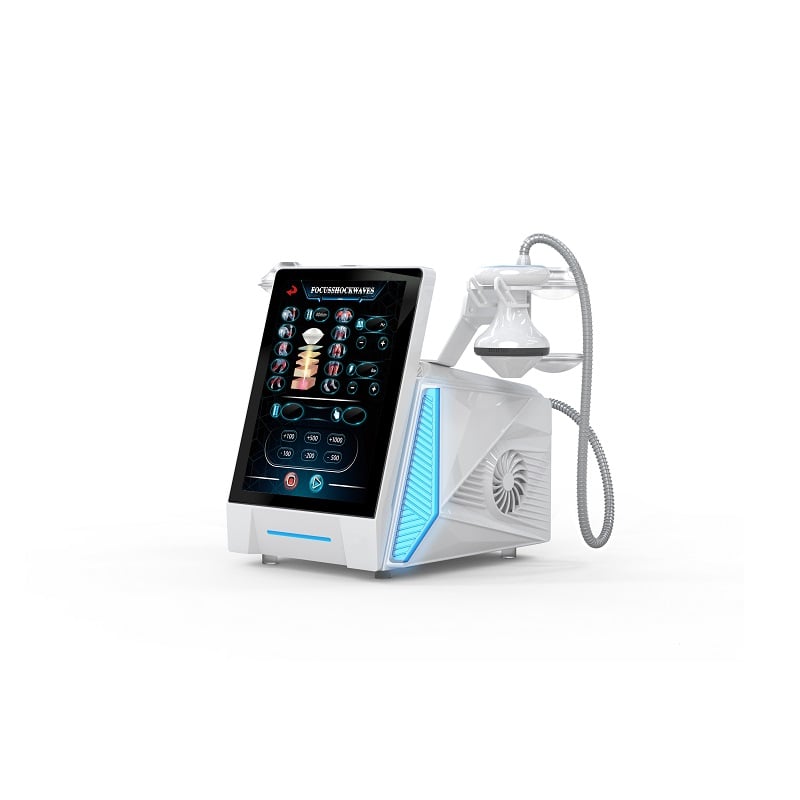
The central idea is not simply that a device sends vibration into the body. Pulse shape, peak pressure, energy distribution, coupling, and treatment depth all affect what reaches a target. A radial shockwave device and a focused system produce different field patterns, so the same label does not mean identical physics or application. These distinctions make treatment selection and communication more precise.
In extracorporeal shockwave therapy, the word extracorporeal means that the pulse originates outside the body. Inside a shockwave therapy machine, an energy source drives an applicator mechanism that creates a short pressure event. Depending on the design, generation may rely on pneumatic acceleration, electromagnetic forces, or piezoelectric elements. Each method shapes how energy starts, how the pulse travels, and what pattern forms at the treatment interface.
A shock wave is characterized by a rapid pressure rise followed by changing pressure phases, rather than a steady push. The shockwave therapy machine therefore delivers repeated, brief events, not continuous heating. Pulse energy, frequency, and the number of pulses describe different aspects of delivery; none alone fully defines the exposure. Clinicians interpret settings alongside the device design and the intended treatment area.
A focused system concentrates acoustic energy toward a selected region, while a radial shockwave device typically produces its greatest mechanical effect near the applicator and spreads outward. In extracorporeal shockwave therapy, this difference matters because distance changes the pressure and energy distribution. A radial shockwave device may suit broader, more superficial treatment zones, whereas focused delivery can target a defined depth when clinically appropriate.
These patterns are not simply stronger and weaker versions of one another. They represent distinct ways of distributing energy, and treatment planning must account for anatomy, access, and the intended target. A shockwave therapy machine should be understood through its output characteristics, not just its control-panel labels. This perspective helps practitioners discuss why one field geometry may be considered for a particular musculoskeletal therapy objective.
After generation, the pulse crosses the applicator and a coupling medium before entering tissue. Air gaps can reflect acoustic energy, so contact and suitable coupling help reduce that barrier. In extracorporeal shockwave therapy, the wave then encounters tissues with different acoustic properties. Changes in density and sound speed at boundaries can alter transmission, reflection, and local pressure, making anatomy relevant to the delivered field.
The shockwave therapy machine setting is not a direct measurement of the energy absorbed by a specific structure. Skin, connective tissue, fluid, and bone each influence propagation, and the route between applicator and target matters. For a radial shockwave device, the energy distribution changes with distance from the source. These physical realities support careful placement and coupling rather than assumptions based only on nominal output.
Pressure describes force distributed over an area, while energy density describes energy delivered through a unit area. They are related but not interchangeable, so a single setting cannot summarize every feature of a pulse. In musculoskeletal therapy, these distinctions help explain why clinicians consider intensity, pulse count, frequency, and treatment location together. They also clarify why protocols should be interpreted in the context of the specific device.
The mechanical stimulus may produce effects at cellular and tissue levels, but responses depend on the pulse and biological context. Extracorporeal shockwave therapy is not best described as a universal tissue reset or a guaranteed repair mechanism. Rather, it applies a controlled mechanical stimulus that may be used within a broader care plan. A radial shockwave device also has practical limits related to field depth and target accessibility.
Treatment planning starts by defining the target, its depth, and nearby structures, then considering whether focused or radial delivery suits that geometry. A shockwave therapy machine should provide clear information about its mode and output so a clinician can relate controls to intended exposure. In musculoskeletal therapy, assessment and diagnosis remain essential; physics informs delivery but does not determine whether a treatment is appropriate on its own.
Focused delivery may be considered when the target is relatively localized and depth is a key factor. A radial shockwave device can be considered for broader regions closer to the applicator. These are general physical distinctions, not treatment recommendations for every condition. The clinician must weigh patient factors, treatment goals, contraindications, and the device instructions before choosing an approach.
Settings should be read as a coordinated set rather than isolated numbers. Energy level, frequency, pulse count, applicator position, and coupling all influence the actual exposure. Extracorporeal shockwave therapy also requires attention to patient response during treatment, since the physical input is delivered to living tissue. A shockwave therapy machine cannot replace clinical judgment, nor can its display alone confirm the precise energy absorbed at a target.
Clear communication helps connect the physics with realistic expectations. Practitioners can explain that treatment applies mechanical pulses, that field geometry influences where energy is concentrated, and that response varies. In musculoskeletal therapy, this context supports informed discussion without promising a particular outcome. Device documentation and training should guide operation, while the radial shockwave device or focused system is selected according to clinical reasoning.
It generates brief acoustic pressure pulses and transfers them through an applicator into tissue. The pulse pattern depends on the device design. Extracorporeal shockwave therapy uses an external source, and a radial shockwave device distributes energy differently from a focused system. The machine supplies the stimulus, while assessment determines whether its use fits the clinical context and musculoskeletal therapy plan.
Focused delivery concentrates energy toward a selected depth, while radial delivery generally spreads energy outward from the applicator. The practical difference concerns the shape and distribution of the acoustic field, not a universal ranking of effectiveness. Clinicians compare target location, anatomy, device specifications, and treatment goals when considering extracorporeal shockwave therapy for musculoskeletal therapy.
No. Displayed settings describe aspects of device output, but coupling, tissue boundaries, distance, and applicator placement influence transmission and absorption. A radial shockwave device has its own field characteristics, and a shockwave therapy machine display cannot map the dose inside an individual target. Extracorporeal shockwave therapy decisions therefore combine device guidance, clinical assessment, and realistic interpretation of physical limits.

