

 EN

how-electrode-size-and-shape-affect-treatment-depth-in-tecar, how-electrode-size-and-shape-affect-treatment-depth-in-tecar, /blog
EN
Electrode size and shape influence how energy couples into tissue during tecar therapy, but they do not set treatment depth on their own. Contact area, pressure, movement, tissue characteristics, and operating mode all affect the response. Understanding capacitive resistive electric transfer helps practitioners choose an applicator and technique that fit the treatment area and clinical objective.
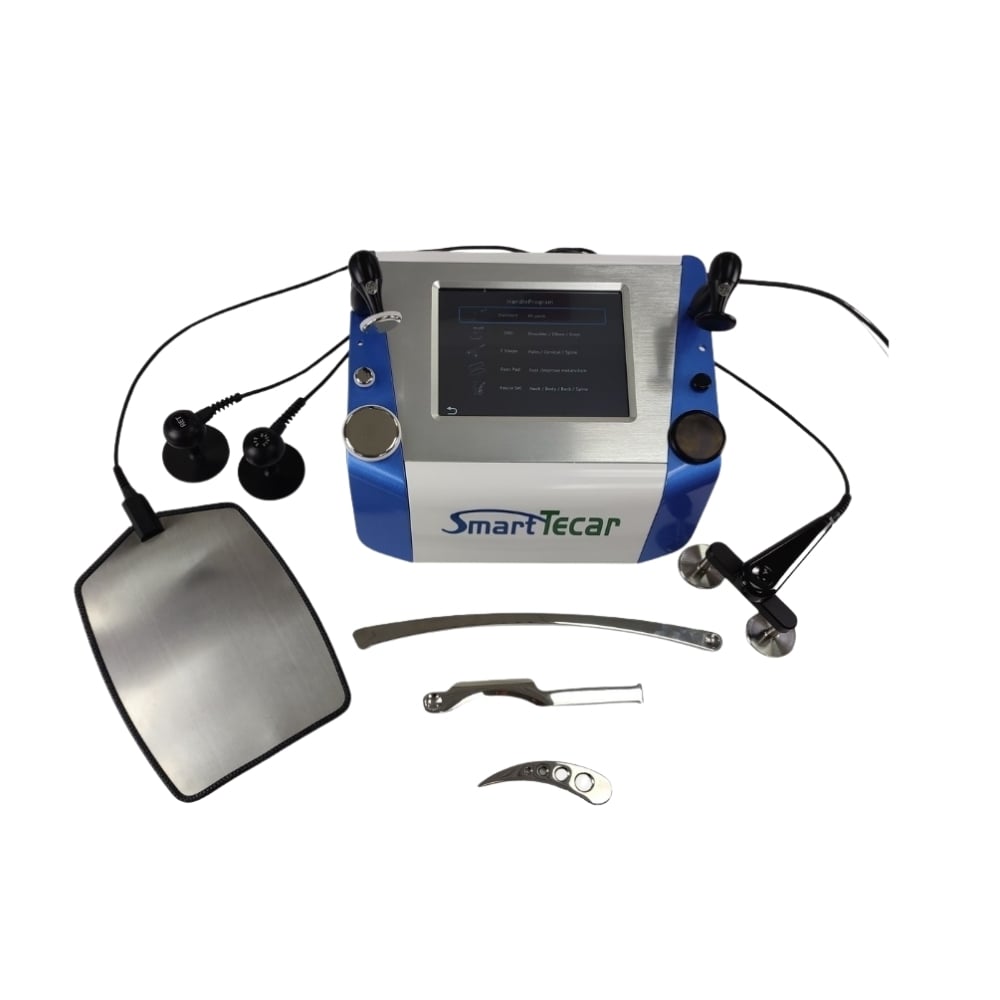
A radiofrequency therapy device transfers energy through an electrode and a return path, producing a response that depends on more than the applicator diameter. A smaller contact area can concentrate energy locally, while a larger one distributes contact across more tissue. Neither automatically means deeper heating. The practical aim of deep heat therapy is a controlled, comfortable response suited to the target, not simply the greatest possible depth.
A small electrode concentrates contact over a limited surface, which can be useful around compact anatomical regions or when precise handling matters. In tecar therapy, this smaller footprint may create a more localized sensation, so movement and pressure need careful control. A radiofrequency therapy device still responds to tissue impedance and technique; electrode size alone cannot predict how far the effect will extend beneath the skin.
A broad electrode covers more tissue at once and can make treatment of larger regions more practical. During capacitive resistive electric transfer, the larger contact surface may distribute energy across a wider area, but that should not be confused with a guaranteed increase in depth. For deep heat therapy, clinicians should assess the patient’s response and adjust motion, contact, and settings rather than assuming a larger head reaches deeper structures.
Match the applicator to the anatomy and the intended coverage. A compact head may be easier to guide near a joint contour, while a broader head can reduce the number of passes across a large muscle region. With tecar therapy, the selected size should support stable contact without forcing the practitioner to press excessively. That approach helps make capacitive resistive electric transfer more controlled and repeatable.
The working area also affects how quickly a practitioner can cover tissue evenly. A large head may suit a broad treatment zone, but it can be awkward in a narrow space or over a curved surface. A radiofrequency therapy device should therefore be assessed for its available applicator sizes and handling, while deep heat therapy remains a treatment objective guided by feedback, not a property guaranteed by the head.
A flat electrode can maintain broad contact on relatively even surfaces, whereas a contoured head may follow curves more naturally. During capacitive resistive electric transfer, consistent contact matters because gaps or rocking can change the local interaction. A curved applicator may help around a limb or joint, but its shape does not independently drive energy deeper. Practitioners should prioritize comfortable, even contact throughout tecar therapy.
Edge geometry also influences handling. A rounded rim can glide more smoothly over a curved area, while a broad face may feel stable on a flatter region. Consider the tissue contour, access, and movement path before choosing an applicator for deep heat therapy. A radiofrequency therapy device is most useful when its shape lets the practitioner maintain contact without repeatedly changing pressure or losing control of the treatment area.
Electrode movement is part of the delivery method, not a minor finishing detail. Steady, overlapping passes can help maintain consistent contact across the target, while prolonged stationary contact may create an uncomfortable localized sensation. In tecar therapy, practitioners should monitor comfort and skin response as they move. Capacitive resistive electric transfer depends on the complete application method, including electrode contact, selected mode, and the return circuit.
Pressure should be sufficient to maintain reliable contact, not used as a substitute for suitable sizing or settings. Excessive pressure can reduce comfort and make movement less fluid. When using a radiofrequency therapy device, observe how the patient responds and adjust the technique within the device instructions. The intention of deep heat therapy is a tolerable, relevant treatment response, rather than a sensation of intensity used as proof of tissue depth.
For a broad muscle area, a larger electrode may support efficient coverage; for a smaller or irregular region, a compact or contoured head may offer better control. These choices concern access and energy distribution, not a simple shallow-versus-deep rule. During capacitive resistive electric transfer, practitioners should consider the target, anatomy, comfort, and movement together. The tecar approach is therefore guided by the full treatment context.
A patient with sensitivity or limited tolerance may need a more conservative application, regardless of electrode size. A broader contact area can feel different from a small one, and individual perception varies. In tecar therapy, begin with an appropriate technique and reassess during treatment. A radiofrequency therapy device should be used according to its instructions and the practitioner’s training, with the electrode selected to fit the region rather than to promise a particular depth.
Treatment depth is not directly visible during application, so evaluation relies on clinical reasoning, patient feedback, and the intended outcome. Keep the applicator moving as appropriate, maintain reliable contact, and make gradual adjustments within recommended operating parameters. Deep heat therapy should not be inferred from electrode dimensions alone. Capacitive resistive electric transfer describes an energy-delivery approach, while the observed response reflects the interaction of device, tissue, and technique.
Record the applicator used, treatment area, mode, relevant settings, and patient response when these details support continuity of care. If comfort changes or contact becomes inconsistent, reassess the head shape, positioning, and movement. A radiofrequency therapy device does not remove the need for individual assessment. By treating size and shape as practical controls rather than depth guarantees, practitioners can make more reasoned tecar therapy choices.
No. A larger electrode generally covers a wider contact area, but it does not guarantee greater treatment depth. During capacitive resistive electric transfer, tissue properties, mode, settings, contact, and movement all contribute to the response. Choose the size that fits the target and monitor the patient rather than using electrode diameter as a depth measure.
A smaller or contoured head can be useful when the target is compact, access is limited, or the surface is curved. It may improve control of contact, but it can also concentrate sensation over a smaller area. With deep heat therapy, assess comfort and application technique carefully; the shape itself does not establish how deep energy reaches.
Treat depth as a clinical objective, not a value determined by the electrode alone. Consider the treatment region, patient response, device instructions, mode, and application method. A radiofrequency therapy device can deliver energy through different applicators, but tecar therapy should be adjusted using appropriate clinical judgment and ongoing feedback rather than assumptions based on size or shape.

