

 EN

how-focused-shockwave-therapy-delivers-energy-at-depth-safely, how-focused-shockwave-therapy-delivers-energy-at-depth-safely, /blog
EN
Focused shockwave therapy delivers acoustic energy toward a selected treatment zone rather than distributing it uniformly across the skin. Its depth and safety depend on how the energy is generated, focused, adjusted, and applied to an individual’s condition. Understanding these factors helps clinicians plan treatment responsibly and set realistic expectations for patients.
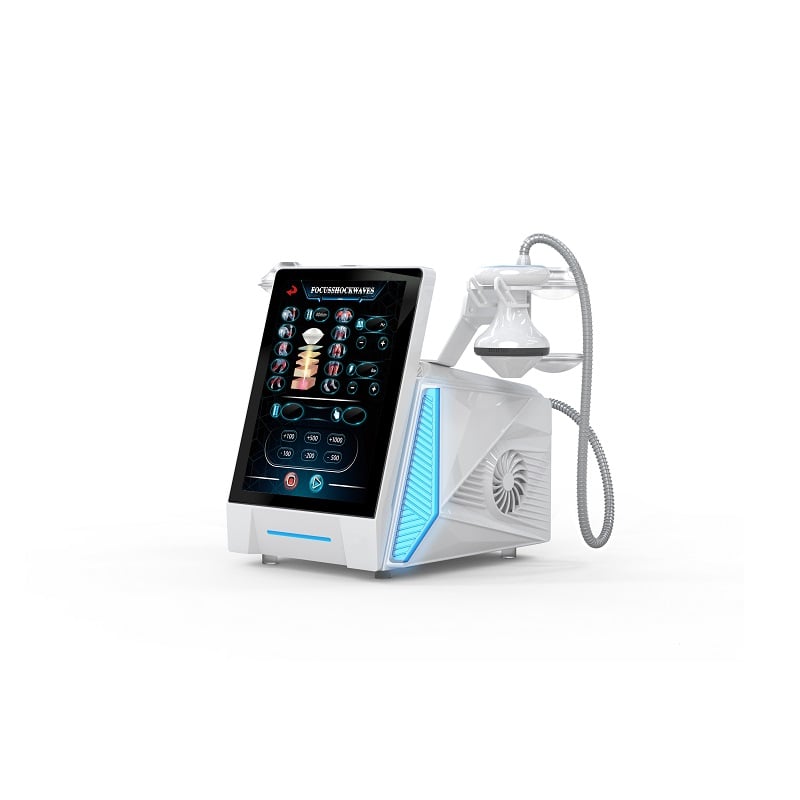
The central principle is controlled energy delivery: a focused shockwave device creates a wave that converges at a chosen depth, while the clinician selects suitable settings and positions the applicator carefully. As a form of extracorporeal shockwave treatment, it works from outside the body. In orthopedic rehabilitation, that combination can support targeted care without treating depth as a substitute for sound assessment.
Focused shockwave therapy uses a wave-generating system and an applicator designed to bring acoustic energy together at a focal point. The energy travels through tissue before reaching that zone, so the treatment target is not simply the skin surface. A focused shockwave device is selected and configured to match the intended depth, while extracorporeal shockwave delivery keeps the source outside the body.
This distinction matters when a clinician assesses a deeper structure or a smaller, defined treatment area. Focused shockwave therapy is not interchangeable with every other acoustic treatment approach, because the energy distribution and target differ. In orthopedic rehabilitation, the clinician first identifies whether the suspected tissue and symptoms justify a focused approach; extracorporeal shockwave describes the delivery method, not a diagnosis or guaranteed outcome.
Depth is a treatment parameter, not a promise that energy will affect only one structure. Tissue characteristics, anatomy, applicator contact, and selected settings all influence delivery. A focused shockwave device therefore needs a clear clinical target and an appropriate protocol. The practitioner uses focused shockwave therapy only after considering the treatment site, the patient’s presentation, and whether the intended focal zone is suitable.
For orthopedic rehabilitation, this planning connects the patient’s functional complaint with a plausible tissue target. The label extracorporeal shockwave does not itself indicate the depth or dose used in a session. Instead, the clinician aligns assessment, positioning, and settings. Focused shockwave therapy becomes more precise in practice when the device’s capabilities are understood and the treatment plan is adapted rather than applied as a fixed routine.
Safe use starts before the applicator touches the skin. A clinician reviews the health history, examines the area, confirms the treatment objective, and checks for reasons to avoid or modify treatment. This is especially important in orthopedic rehabilitation, where pain can have multiple causes. A focused shockwave device should be used within its instructions, and focused shockwave therapy settings should reflect the patient and target.
The practitioner also explains expected sensations, possible short-term reactions, and the planned course of care. Extracorporeal shockwave treatment is delivered from outside the body, but that does not remove the need for screening or clinical judgment. With focused shockwave therapy, energy level, pulse delivery, and treatment area are adjusted according to response and protocol. The goal is a measured intervention, not the highest setting a device can produce.
Accurate positioning helps place the intended focal region in relation to the target. Coupling material supports contact between the applicator and skin, limiting avoidable air gaps that can interfere with transmission. During orthopedic rehabilitation, the clinician monitors patient feedback and checks technique throughout treatment. A focused shockwave device is only one part of this process; operator training and consistent setup matter as well.
Patient comfort and clinical response guide whether treatment should continue, change, or stop. The clinician follows device instructions and local protocols rather than assuming every extracorporeal shockwave session uses the same settings. Focused shockwave therapy should be applied to the planned region, with attention to positioning and tolerance. This active monitoring supports safer delivery and helps keep the session connected to the original assessment.
A focused approach is most useful when examination supports a defined treatment target and the intended depth is relevant to the care plan. In orthopedic rehabilitation, focused shockwave therapy may be considered alongside exercise, activity guidance, and other appropriate interventions. It should not replace a broader assessment. The clinician selects a focused shockwave device based on suitable features, treatment requirements, and the ability to follow a consistent protocol.
The care team should define what progress will look like, such as changes in symptoms or functional tasks, and review it over time. Extracorporeal shockwave is a delivery category, not a stand-alone rehabilitation plan. Focused shockwave therapy may be one component of care when its use fits the clinical picture. Clear goals help the practitioner decide whether to continue, adjust, or reconsider the approach.
Patients should understand that response can vary and that a session does not guarantee a particular result. The clinician explains the rationale for treatment, relevant precautions, and when to report an unusual reaction. In orthopedic rehabilitation, follow-up connects treatment with function and the wider plan. A focused shockwave device should support that plan rather than define it, and the practitioner documents settings and patient response.
When symptoms do not respond as expected, reassessment is more useful than automatically increasing energy. The clinician can revisit the diagnosis, target, technique, and other care options. Extracorporeal shockwave treatment remains an externally delivered intervention with limits, and focused shockwave therapy must be applied within appropriate clinical judgment. A disciplined review process keeps decisions evidence-informed and makes the role of each session clear to both practitioner and patient.
A wave is generated and directed toward a focal zone selected during treatment planning. The practitioner considers anatomy, depth, positioning, and settings. Extracorporeal shockwave delivery means the source remains outside the body; it does not mean every target receives the same energy.
Appropriate screening, device training, accurate positioning, and patient monitoring all contribute. In orthopedic rehabilitation, settings should suit the clinical target and the patient’s response, with device instructions and relevant protocols followed throughout care.
No. Suitability depends on assessment, treatment goals, health history, and the intended tissue target. Extracorporeal shockwave may be considered when clinically appropriate, but it is not a universal solution. The practitioner should explain alternatives and review progress before deciding whether to continue.

