

 EN

how-penetration-depth-changes-focused-shockwave-treatment-planning, how-penetration-depth-changes-focused-shockwave-treatment-planning, /blog
EN
Penetration depth changes where treatment energy is concentrated, so it should shape the plan before a clinician selects settings or begins a session. In focused shockwave therapy, the intended target may sit close to the skin or beneath a layer of soft tissue. Understanding that distance helps clinicians align assessment, applicator choice, positioning, and patient feedback rather than treating every painful area in the same way.
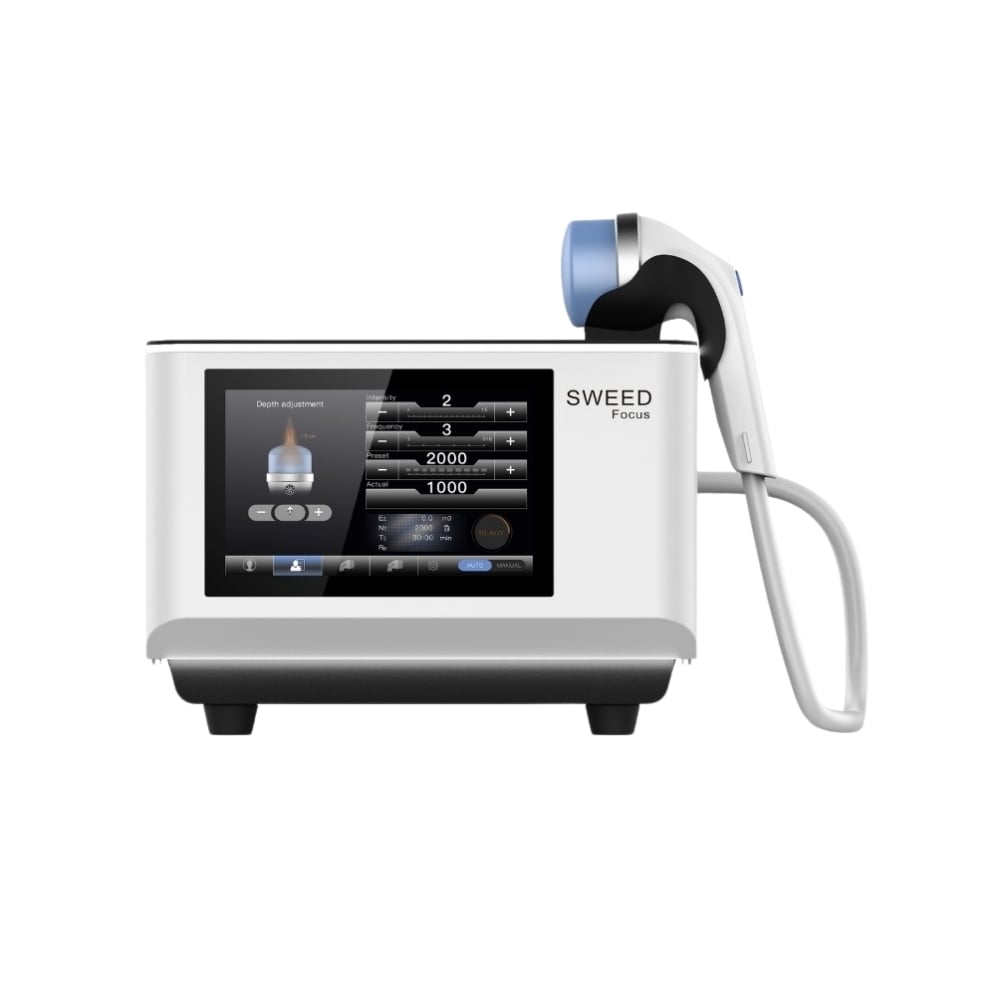
Depth is only one part of treatment planning, but it connects anatomy with practical decisions. A focused shockwave device may offer adjustable focal depth, while the clinician still needs to identify the structure, consider tissue coverage, and check whether the selected approach suits the patient. This article explains how depth affects targeting and session decisions in orthopedic rehabilitation, and why extracorporeal shockwave care depends on individualized assessment.
Start by clarifying which structure is being treated and how far it lies below the skin. A tendon insertion, a superficial fascial region, and a deeper muscle area present different targeting considerations, even when a patient points to the same general pain location. Focused shockwave therapy planning should connect examination findings with the likely target, not simply use the most tender point as a proxy for anatomy.
Palpation, movement testing, relevant history, and available imaging can help form that clinical picture. The clinician should also consider tissue thickness and nearby sensitive structures, because the path from applicator to target is not identical for every patient. In orthopedic rehabilitation, documenting the suspected depth and rationale makes follow-up more useful. Extracorporeal shockwave application should remain guided by the treatment indication and professional judgment.
An adjustable focused shockwave device gives the operator a way to position the focal region for different target depths, within the device’s specifications. The chosen setting is not a diagnosis and cannot compensate for uncertain anatomy. Focused shockwave therapy works best as a planned intervention: define the tissue of interest, select a suitable focal range, position the applicator consistently, and then evaluate the response.
If the suspected structure is relatively superficial, selecting a deeper focal point may not align with the intended target. Conversely, choosing a shallow setting for a deeper structure may create a mismatch between the plan and the treatment field. Extracorporeal shockwave planning therefore includes a reasoned depth choice rather than a default setting. Record the selected depth and the clinical basis so the next session can be considered in context.
Depth influences more than a number on a control panel. It can affect how the clinician positions the applicator, stabilizes the treatment area, and explains expected sensations to the patient. Focused shockwave therapy should be delivered with attention to comfort, response, and the selected protocol. A focused shockwave device must be operated according to its instructions, with settings chosen by a qualified professional.
Patient response can inform a session, but sensation alone does not prove that energy has reached a particular tissue. The clinician should interpret feedback alongside anatomy, the treatment objective, and the patient’s overall presentation. In orthopedic rehabilitation, depth-aware positioning supports a more repeatable process across visits. Extracorporeal shockwave treatment should be adjusted only for a clinical reason, not because a stronger sensation is assumed to indicate a better result.
The same target can require different planning when tissue coverage, sensitivity, or functional status varies. A patient early in rehabilitation may need a cautious introduction, while another may tolerate a familiar protocol; neither decision should be based on depth alone. Focused shockwave therapy planning combines the focal target with treatment history, symptoms, goals, and relevant precautions. A focused shockwave device provides options, but clinical reasoning determines their use.
Depth also affects how clinicians describe uncertainty. If examination findings do not clearly identify the structure, reassess before assuming that changing settings will resolve the ambiguity. Extracorporeal shockwave care is one component of a broader plan, which may include progressive loading, movement work, or other appropriate rehabilitation measures. In orthopedic rehabilitation, explain why a depth or setting is being selected and what information will guide later decisions.
A useful treatment record notes the suspected target, estimated depth, applicator position, selected settings, patient response, and any change in function. Focused shockwave therapy becomes easier to evaluate when successive visits use a clear rationale rather than undocumented adjustments. A focused shockwave device may display the selected focal range, but the record should also capture the clinical reason for that choice.
Reassessment should compare relevant signs over time, including symptoms and functional tasks tied to the patient’s goals. If progress is limited, review the original target hypothesis, depth selection, overall treatment plan, and adherence before making a change. Extracorporeal shockwave should not be repeated or modified automatically. Orthopedic rehabilitation benefits from planned review points, where clinicians can decide whether to continue, adapt, or reconsider the approach.
Depth selection does not replace load management or active rehabilitation. A treatment session should fit the patient’s broader progression, such as restoring capacity for work demands, sport, or daily movement. Focused shockwave therapy may be considered alongside other interventions when clinically appropriate, with goals and review criteria stated clearly. A focused shockwave device is a delivery tool; it does not independently determine the treatment pathway.
For teams, shared language about target depth can improve handovers and continuity. Describe the anatomical structure and reasoning instead of relying only on labels such as shallow or deep. This makes orthopedic rehabilitation plans more interpretable when another clinician reviews the case. Extracorporeal shockwave decisions should remain individualized, with precautions, response, and changes in function considered at each stage.
It helps align the focal region with the suspected tissue target. Clinicians use anatomy, assessment findings, device specifications, and patient response to guide the plan; depth alone does not establish a diagnosis or guarantee an outcome.
A qualified clinician should select a setting that fits the intended target and the device instructions. Extracorporeal shockwave planning should also consider comfort, precautions, treatment history, and the wider orthopedic rehabilitation goals.
Not automatically. Review the target hypothesis, examination findings, treatment record, patient response, and rehabilitation plan first. A change may be appropriate after reassessment, but a different depth should have a clear clinical rationale.

