

 EN

how-pulsed-energy-delivery-reduces-tissue-damage-in-endolaser, how-pulsed-energy-delivery-reduces-tissue-damage-in-endolaser, /blog
EN
Tissue damage during laser procedures has long been a concern for medical practitioners and patients alike. The precision required to deliver therapeutic energy while protecting surrounding structures remains a critical challenge in aesthetic and surgical medicine. Pulsed energy delivery represents a breakthrough approach that fundamentally changes how endolaser systems protect tissue integrity while achieving therapeutic goals.
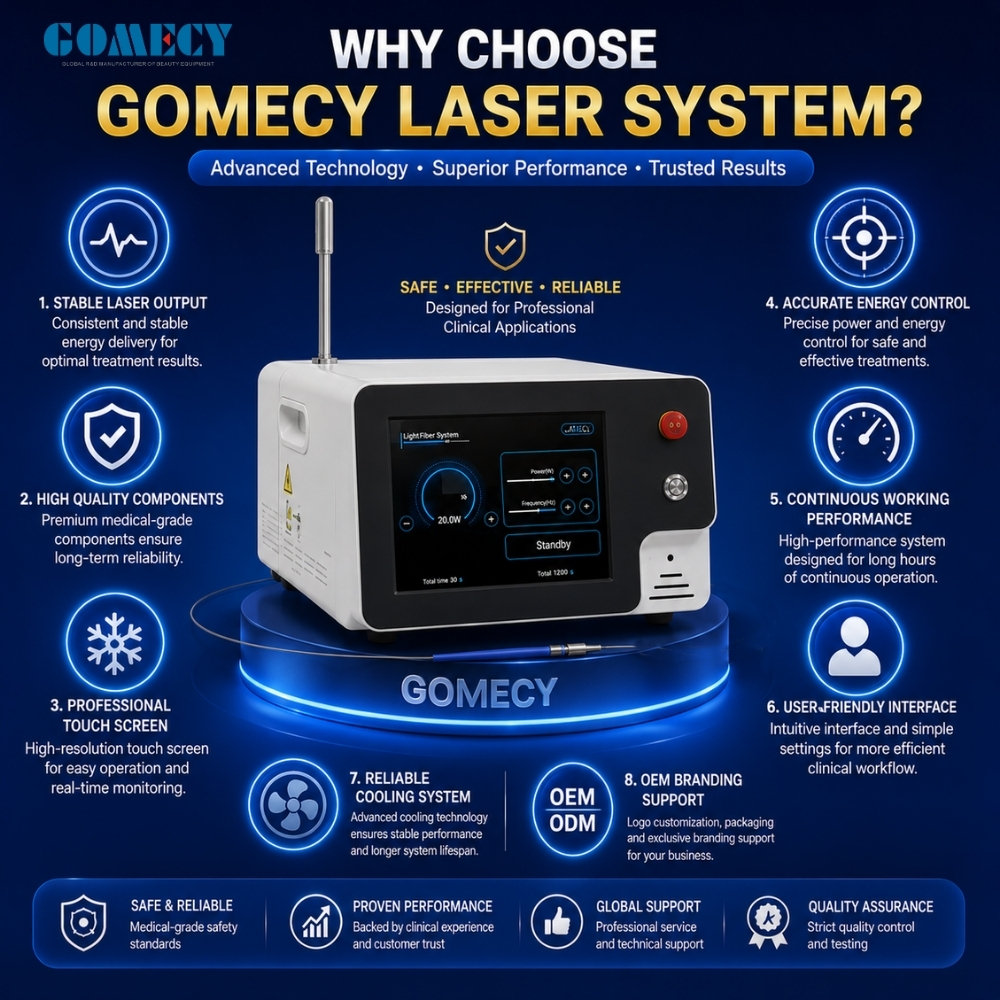
The advancement of minimally invasive laser device technology has transformed patient outcomes across multiple medical specialties. Endolaser treatment utilizes controlled energy pulses rather than continuous wave delivery, allowing clinicians to achieve precise thermal effects without excessive collateral damage. This controlled approach represents the modern standard in laser-based therapeutic procedures, particularly where delicate anatomical structures require protection during intervention.
Pulsed energy delivery works by dividing total laser energy into short, discrete bursts rather than continuous output. Each pulse generates intense localized heat at the target tissue while allowing surrounding structures to cool between pulses. This thermal relaxation principle prevents cumulative heat buildup that would otherwise damage healthy tissue. The duration of each pulse, measured in milliseconds or microseconds, directly determines whether energy preferentially affects target chromophores or spreads to neighboring cells.
When a laser lipolysis fiber delivers energy in pulses, the peak power remains high enough to achieve desired therapeutic effects, but the average power remains significantly lower than continuous delivery. This distinction is crucial for endolaser treatment success. Tissue surrounding the target area experiences minimal temperature elevation because it receives only partial energy exposure before cooling periods intervene. Medical professionals can therefore treat deeper or more sensitive structures with confidence.
Minimally invasive laser device manufacturers must carefully balance peak power intensity against average power delivery. Higher peak power ensures rapid target tissue engagement while lower average power protects collateral structures. A laser lipolysis fiber operating at 50-watt peak power for one millisecond, repeated at specific intervals, delivers average power far below continuous 50-watt output. This fundamental distinction enables endolaser treatment to achieve aggressive therapeutic goals within conservative thermal boundaries.
Clinicians selecting pulse parameters consider tissue absorption characteristics, desired depth of penetration, and safety margins around critical structures. Endolaser systems with adjustable pulse width and repetition rates allow customization for specific anatomical situations. The flexibility inherent in pulsed delivery gives practitioners control unavailable with older continuous-wave approaches.
The primary advantage of pulsed energy in minimally invasive laser device applications lies in selective photothermolysis—the ability to heat target structures while leaving adjacent tissue relatively unaffected. Laser lipolysis fiber utilized in body contouring procedures demonstrates this principle clearly. Adipose tissue containing higher lipid concentrations preferentially absorbs energy, while surrounding collagen structures remain protected by the brief pulse intervals. Endolaser treatment protocols leverage this selectivity to achieve superior aesthetic outcomes with reduced downtime.
Patients undergoing endolaser treatment experience faster healing and reduced post-procedure discomfort compared to continuous-wave alternatives. The controlled thermal delivery minimizes inflammation and tissue necrosis. Medical professionals report improved patient satisfaction when utilizing pulsed technology because recovery timelines shorten and complications decrease. This clinical advantage translates directly to improved reputation and higher procedure volumes for practitioners.
Pulsed delivery extends the duration of safe treatment exposure before risk of thermal damage escalates. With minimally invasive laser device systems, clinicians can work methodically through treatment areas without rushing to minimize exposure time. This reduced pressure allows meticulous technique and comprehensive coverage of target zones. Endolaser treatment sessions can address larger areas or deeper structures safely because the pulsed approach maintains thermal gradients that protect surrounding tissue.
The extended treatment window also reduces operator fatigue and improves procedure repeatability. Practitioners can deliver consistent results across multiple procedures because they maintain stable technical parameters throughout each session. Laser lipolysis fiber applications benefit substantially from this consistency, producing uniform fat reduction and improved skin tightening effects.
Different tissues respond optimally to different pulse durations, and endolaser treatment effectiveness depends on selecting appropriate parameters. Vascular structures targeting by laser lipolysis fiber may respond best to shorter pulses that concentrate energy rapidly, while deeper adipose tissue may benefit from slightly longer pulses allowing deeper penetration before cooling begins. Minimally invasive laser device systems offering adjustable pulse widths provide practitioners the flexibility to optimize treatment for specific clinical situations.
Endolaser systems typically provide pulse width options ranging from 50 microseconds to several milliseconds. This range accommodates superficial dermatological applications requiring rapid energy deposition alongside deeper structural treatments requiring sustained thermal effects. Experienced practitioners understand how to match pulse parameters to tissue chromophore characteristics and treatment objectives, maximizing efficacy while maintaining safety margins.
The interval between pulses—repetition rate—fundamentally influences tissue cooling and cumulative heating effects. Higher repetition rates deliver more total energy to tissue but risk insufficient cooling between pulses. Lower repetition rates provide greater cooling intervals but require longer treatment times to deliver therapeutic dosages. Minimally invasive laser device engineers design systems that balance these competing demands, often providing variable repetition rates so clinicians can optimize for specific treatment scenarios.
Endolaser treatment planning incorporates calculations of cumulative thermal dose to predict final tissue temperature rise. Laser lipolysis fiber applications particularly benefit from this thermal modeling because treating large adipose volumes requires careful energy management to achieve desired liquefaction without excessive burns. Modern endolaser systems incorporate temperature feedback mechanisms and automated safety shutoffs to prevent thermal runaway conditions.
Pulsed endolaser treatment provides superior selectivity in tissue heating, reduced collateral damage, faster healing, and extended safe treatment windows. The controlled thermal profile allows practitioners to address deeper or more sensitive structures safely while maintaining aggressive therapeutic energy. Minimally invasive laser device systems utilizing pulsed delivery consistently demonstrate improved patient outcomes, reduced complications, and higher practitioner satisfaction compared to older continuous-wave approaches.
Parameter selection depends on target tissue characteristics, desired treatment depth, anatomical hazards requiring protection, and specific therapeutic goals. Laser lipolysis fiber applications typically utilize shorter pulses for rapid energy concentration in adipose tissue, while vascular or dermatological applications may require different pulse durations. Experienced clinicians leverage adjustable pulse width and repetition rate options available on modern endolaser systems, often consulting treatment protocols established through clinical research specific to their target indication.
Yes, pulsed delivery significantly reduces discomfort compared to continuous-wave exposure because the brief thermal pulses prevent excessive temperature elevation and tissue trauma. Patients report reduced pain during endolaser treatment and less post-procedure soreness when comparing pulsed versus continuous delivery at equivalent average power. The reduced inflammation characteristic of controlled pulsed delivery also translates to faster recovery and fewer complications, further improving the patient experience with minimally invasive laser device applications.

