

 EN

how-radiofrequency-transfer-heats-deep-tissue-in-tecar-work, how-radiofrequency-transfer-heats-deep-tissue-in-tecar-work, /blog
EN
TECAR heats tissue by delivering radiofrequency energy through an applicator and the patient’s body, where electrical interaction produces heat. In tecar therapy, the clinician controls the treatment area, contact, and energy settings to influence where warmth develops. Understanding this transfer process helps rehabilitation teams use a radiofrequency therapy device with realistic expectations rather than treating it as a simple surface warmer.
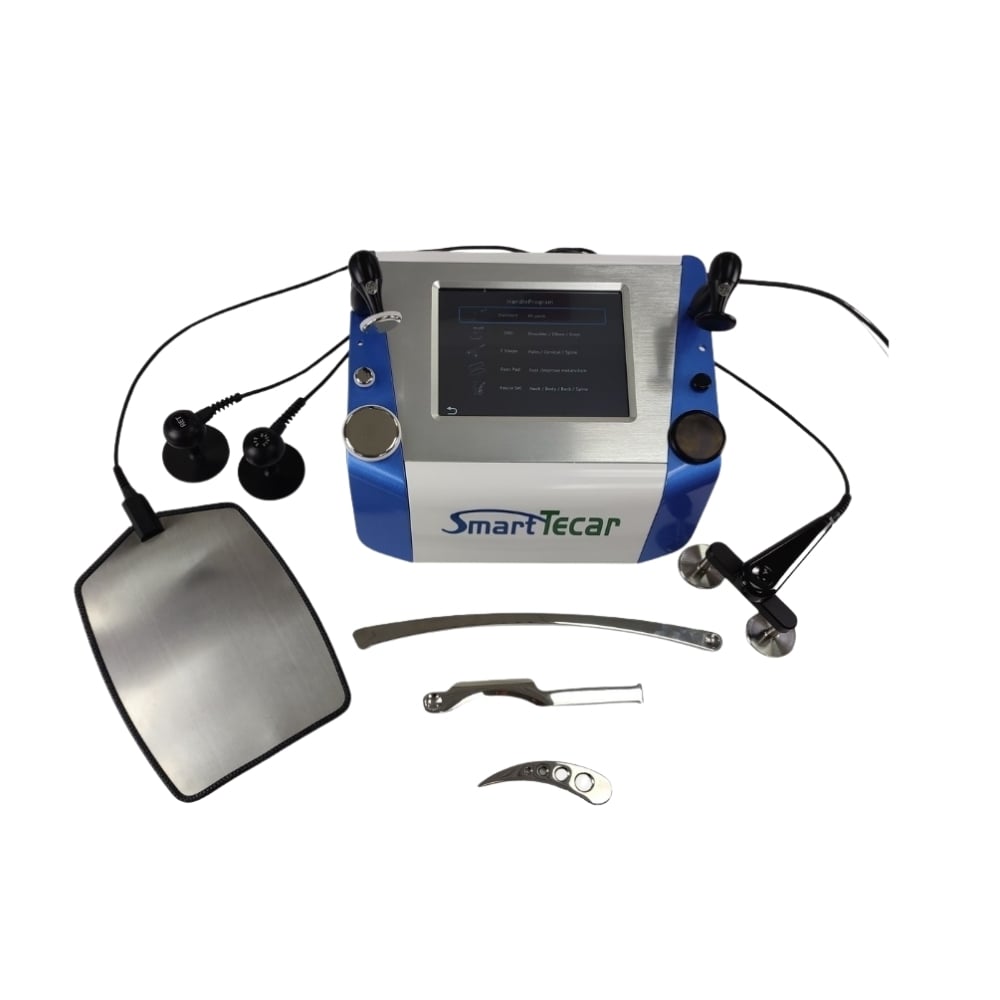
The central idea is that deep heating depends on energy delivery and tissue response, not merely on how hot the applicator feels. Capacitive resistive electric transfer describes the two commonly used modes: each shapes energy coupling differently. This distinction explains how deep heat therapy can be adjusted for varied rehabilitation goals while still requiring careful assessment, communication, and monitoring.
A tecar therapy system applies alternating current at radiofrequency through an electrode that contacts the skin, usually with a conductive medium. As energy passes through tissues, electrical resistance and tissue properties contribute to heat generation. This is why capacitive resistive electric transfer is more than a label: it describes treatment modes that influence how the current couples with the body.
The radiofrequency therapy device completes an electrical circuit between the active electrode and a return electrode. Energy distribution depends on the applicator, contact quality, tissue composition, and selected output. Warmth may be perceived at the skin or deeper in the treated region, but sensation alone cannot measure the exact temperature of internal tissue. Deep heat therapy should therefore be guided by patient feedback and clinical judgment.
TECAR does not send a uniform pocket of heat to a precise depth. The clinician influences the treatment response through electrode choice, movement, contact pressure, duration, and power adjustment. In tecar therapy, these variables are matched to the person and the clinical objective, because tissue thickness, sensitivity, circulation, and the treatment site can all affect comfort and response.
Capacitive resistive electric transfer supports this adjustment by offering different coupling characteristics rather than a guaranteed depth map. The radiofrequency therapy device should be operated according to its instructions and the treatment plan. A gradual increase in warmth can help the clinician assess tolerance, while deep heat therapy remains an intended tissue response, not a promise that every structure will receive identical energy.
Capacitive mode typically uses an insulated active electrode, concentrating the electrical interaction more around tissues with higher water content near the applicator. This can make it useful when the treatment focus involves more superficial soft tissue. A tecar therapy session still needs a defined clinical rationale; the mode should not be selected only because a patient reports a particular level of warmth.
The clinician maintains suitable contact and keeps the electrode moving as required by the device guidance. Capacitive resistive electric transfer is best understood as a choice in energy coupling, not as a simple superficial-versus-deep switch. For deep heat therapy, the desired response must be balanced with comfort, the treatment area, and any contraindications identified during screening.
Resistive mode uses a non-insulated electrode and may direct more interaction toward tissues that offer greater resistance, including some denser structures. That does not mean it selectively heats a named structure in every patient. The radiofrequency therapy device still transfers energy through a connected system, and the clinician must interpret sensation and response in context.
In practice, the treatment mode is chosen to fit the target region and therapeutic aim. Capacitive resistive electric transfer allows a practitioner to adjust the approach as assessment findings change, while tecar therapy remains one part of a broader rehabilitation plan. Clear communication helps identify excessive warmth, discomfort, or altered sensation early, allowing the session to be modified or stopped.
Before treatment, clinicians review the patient’s history, skin condition, sensory awareness, and the intended area. They explain expected sensations and agree on a signal to pause. A radiofrequency therapy device should be configured according to its manual and the clinician’s training, with attention to electrode placement, conductive medium, and stable contact throughout treatment.
Settings are not interchangeable across people or body regions. In tecar therapy, start conservatively and adjust based on the clinical plan, device guidance, and patient response. Capacitive resistive electric transfer may be changed when the target or comfort changes, but an increase in output should not be used to chase heat without a clear reason. Deep heat therapy requires ongoing observation, not a set-and-forget approach.
TECAR may be incorporated into rehabilitation sessions alongside movement, manual techniques, or other planned care. The purpose is to support a treatment strategy, not replace diagnosis or active rehabilitation. A clinician may use tecar therapy where controlled radiofrequency heating fits the goals, while considering the patient’s condition and whether another approach is more appropriate.
Document the treatment area, mode, relevant settings, duration, and patient response so the next session can be planned consistently. The radiofrequency therapy device should be checked for intact cables, electrodes, and accessories before use. Capacitive resistive electric transfer describes the delivery approach, while observed response determines whether deep heat therapy was comfortable and appropriate for that session.
The electrode contacts the skin, but radiofrequency energy interacts with tissues as part of an electrical circuit. In tecar therapy, warmth develops through energy transfer and tissue properties, rather than simply from a hot applicator. The clinician monitors sensation because perceived warmth does not precisely identify internal temperature.
They influence energy coupling differently, but neither mode guarantees a particular depth. Capacitive resistive electric transfer gives clinicians options to adapt treatment to the site and goal. Mode selection for deep heat therapy should also account for comfort, assessment, device instructions, and patient-specific considerations.
Explain expected sensations before starting, use appropriate settings, and ask for regular feedback. A radiofrequency therapy device should be adjusted or stopped if the patient reports excessive heat, pain, or unusual discomfort. Tolerable warmth during tecar therapy supports informed monitoring, but it does not replace clinical assessment or safe operating procedures.

