

 EN

how-treatment-density-alters-downtime-after-co2-resurfacing, how-treatment-density-alters-downtime-after-co2-resurfacing, /blog
EN
The relationship between treatment density and postoperative downtime is one of the most critical factors clinicians must understand when performing fractional co2 laser procedures. Treatment density directly determines how intensely the skin is damaged during ablation, which in turn dictates the length and severity of the healing phase. Understanding this relationship enables practitioners to balance clinical outcomes with patient expectations and scheduling realities.
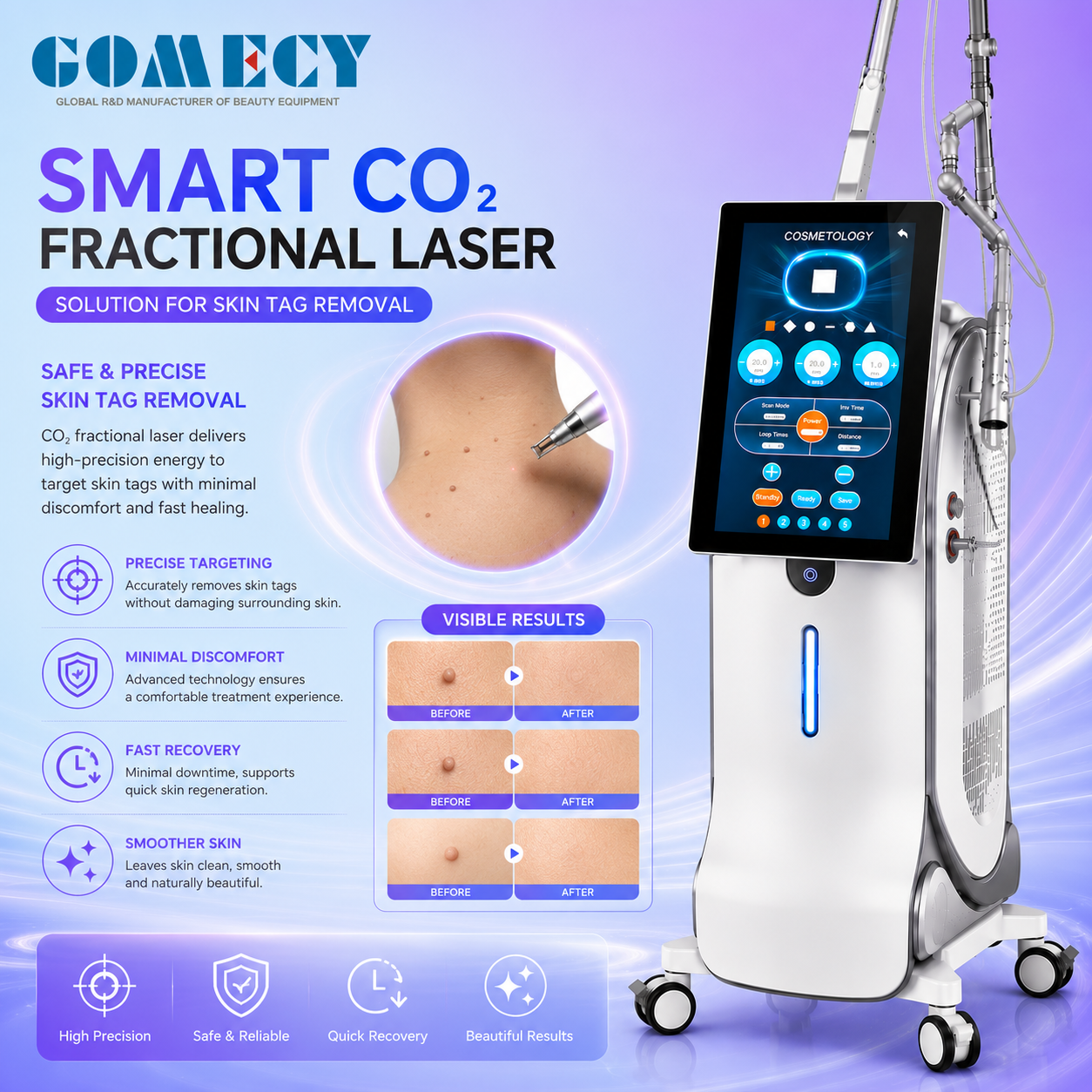
Treatment density in fractional laser technology refers to the percentage of skin surface area actively treated during a single pass or session. Higher densities mean more tissue is ablated, triggering more substantial inflammatory responses and collagen remodeling. Lower densities preserve more untreated skin, which accelerates healing. The choice of density fundamentally shapes both the clinical pathway and patient recovery timeline, making it essential knowledge for anyone performing or considering co2 fractional resurfacing procedures.
Treatment density operates on a spectrum, typically ranging from 20 percent to 100 percent in modern fractional laser systems. At lower densities such as 20 to 40 percent, the fractional laser treatment creates microscopic treatment zones while leaving significant islands of untreated skin intact. These untreated zones serve as biological reservoirs, allowing epithelial cells to migrate and proliferate across the treated areas much more rapidly. Patients treated at these lower densities often experience erythema that resolves within three to five days, with swelling typically subsiding within 48 to 72 hours.
Conversely, higher treatment densities of 70 to 100 percent create more confluent thermal damage across the skin surface. At these intensities, the skin remodeling laser ablates substantially more collagen and causes more pronounced dermal injury. The body's inflammatory response intensifies, requiring longer periods for new collagen deposition and tissue remodeling. Patients undergoing high-density co2 fractional resurfacing procedures typically experience downtime extending from seven to fourteen days for visible erythema, with full healing continuing for weeks or months beneath the surface.
The biological mechanisms underlying density-dependent downtime stem from how the skin responds to thermal injury depth and breadth. At moderate densities of 40 to 60 percent, the fractional co2 laser creates a balanced inflammatory cascade. Immune cells infiltrate the treatment zone, clearing damaged tissue while growth factors signal fibroblasts to begin collagen synthesis. This phase typically lasts four to seven days, during which patients experience the most noticeable downtime symptoms including oozing, crusting, and significant erythema.
Higher-density fractional laser treatment extends this inflammatory phase substantially because more dermal tissue requires reorganization. The skin remodeling response becomes more aggressive, and the timeline for achieving epithelial closure lengthens. However, this prolonged downtime correlates with enhanced long-term results in terms of skin texture improvement, scar revision, and photoaging reversal. Clinicians must counsel patients that increased density demands increased downtime but delivers proportionally stronger structural skin improvements.
Practical patient management requires matching treatment density to individual circumstances, professional obligations, and aesthetic goals. Patients with significant professional or social commitments may tolerate only minimal downtime, making 25 to 35 percent density appropriate despite reduced clinical intensity. These conservative co2 fractional resurfacing sessions may require multiple treatment passes over several months to achieve desired outcomes, but they allow patients to return to normal activities with minimal disruption. Makeup and light activities typically resume within two to three days at these conservative settings.
Patients with greater scheduling flexibility or those pursuing aggressive skin remodeling benefit from higher-density fractional laser treatment protocols. Densities of 80 to 100 percent generate superior clinical results for deep scarring, severe photodamage, and facial rejuvenation but mandate realistic downtime expectations. These patients must plan for seven to ten days of visible healing, during which employment and social activities should be minimized. The fractional co2 laser's ability to generate transformative tissue remodeling justifies this extended recovery window for motivated patients.
Some practitioners employ staged fractional co2 laser protocols, applying moderate density treatments across multiple sessions spaced four to six weeks apart. This approach distributes cumulative downtime across several shorter recovery periods rather than concentrating it into one extended healing phase. Patients completing three sessions of 50 to 60 percent density experience approximately five to seven days of downtime per session, totaling two to three weeks of intermittent downtime over several months. This method often produces superior cumulative results compared to single high-density sessions while accommodating patient schedules more flexibly.
The advantages of multi-session fractional laser treatment include reduced systemic inflammatory burden, lower risk of adverse events, and distributed collagen remodeling that may yield more natural-appearing progressive improvements. However, patients must commit to the full treatment series and maintain rigorous sun protection and wound care between sessions. Total skin remodeling laser downtime increases numerically but distributes more broadly, allowing patients to integrate treatments into their lives rather than disrupting extended periods all at once.
Accurate downtime prediction requires understanding that treatment density is not the sole determinant of recovery duration. Skin type significantly influences healing rates, with darker skin types generally requiring longer recovery periods and higher risk of postinflammatory hyperpigmentation. Age, skin hydration status, baseline skin barrier integrity, and concurrent medications all modulate how individual patients respond to fractional co2 laser injury. Younger patients with robust skin barrier function and minimal photodamage often heal faster than older patients with compromised skin ecology, even at identical treatment densities.
Practitioners must conduct thorough pretreatment consultations addressing these variables explicitly. Discussing realistic downtime expectations reduces patient dissatisfaction and improves treatment compliance with posttreatment care protocols. Clear communication about the density-downtime relationship, supported by before-and-after imagery showing density-specific recovery timelines, establishes trust and allows patients to make informed scheduling decisions before fractional laser treatment commences.
Downtime duration can be modulated substantially through meticulous posttreatment care. Strict sun avoidance, aggressive moisturization, appropriate wound cleansing protocols, and judicious use of topical medications all accelerate healing after co2 fractional resurfacing. Patients who maintain vigilant skincare regimens consistently report shorter visible downtime and reduced erythema persistence compared to those with inconsistent compliance. Conversely, poor posttreatment care extends downtime, increases complication risks, and compromises clinical outcomes despite optimal initial treatment parameters.
The fractional co2 laser's efficacy depends fundamentally on patient behavior during the critical healing window. High-density treatments create more demanding posttreatment requirements, as compromised barrier function leaves skin vulnerable to infection, excessive drying, and irritation. Educating patients that their posttreatment actions substantially influence their actual downtime experience motivates compliance and often results in superior outcomes at all treatment density levels.
If your professional or social commitments severely limit downtime availability, densities between 25 and 40 percent provide the shortest recovery windows, typically two to four days of visible erythema and swelling. These conservative fractional laser treatment parameters allow return to makeup application and light activities within 48 to 72 hours. However, clinical results are proportionally modest, requiring multiple sessions spaced weeks apart to achieve significant skin remodeling laser improvements. Discuss multi-session protocols with your practitioner to accumulate results gradually while maintaining minimal per-session downtime.
Higher treatment densities generate more aggressive collagen remodeling and superior long-term texture improvements, scar revision, and photoaging reversal. Co2 fractional resurfacing at 80 to 100 percent density produces dramatic transformations in skin quality that persist for years, as the intense thermal injury stimulates robust fibroblast activity and organized collagen deposition. Lower-density fractional co2 laser treatments produce more subtle improvements that may stabilize after several sessions. The relationship is generally linear: greater density-related downtime correlates with proportionally enhanced clinical durability and intensity of improvement.
Yes, many advanced fractional laser systems including modern co2 fractional resurfacing platforms allow density customization across different treatment zones during a single session. Practitioners can apply higher densities to areas of severe scarring or photodamage while using lower densities in more delicate or cosmetically sensitive regions. This selective fractional laser treatment approach optimizes clinical efficacy in each zone while moderating overall downtime by preventing unnecessarily high density in areas requiring only modest improvement. Discuss zone-specific density strategies with your treatment provider to personalize both outcomes and recovery demands.

