

 EN

radial-vs-focused-applicators-selecting-the-right-shockwave-setup, radial-vs-focused-applicators-selecting-the-right-shockwave-setup, /blog
EN
Choosing between radial and focused applicators starts with the treatment target, not the name on the console. A shockwave therapy machine may support one delivery style or both, but the applicator determines how energy is distributed and where it is concentrated. For musculoskeletal therapy, clinicians should match the setup to the tissue area, assessment findings, patient tolerance, and intended treatment plan. Understanding extracorporeal shockwave therapy helps clarify why these approaches are related yet not interchangeable.
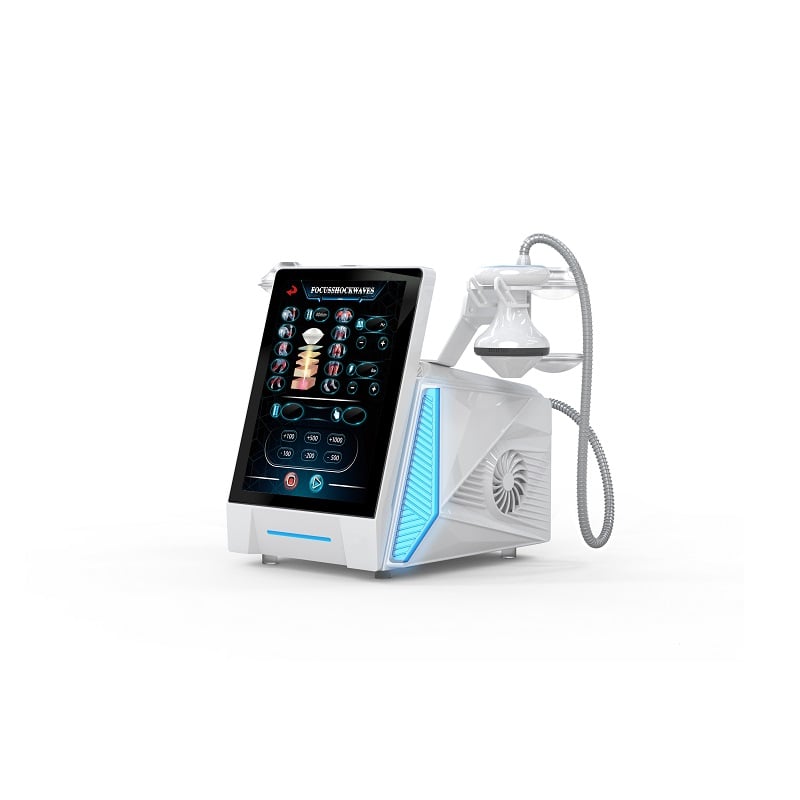
Radial applicators disperse pressure outward from the treatment head, while focused applicators concentrate energy within a selected zone. That distinction influences how a clinician approaches superficial, broader regions versus targets that appear deeper or more localized. A radial shockwave device can suit broad treatment areas, whereas focused delivery may be considered when the treatment plan calls for a defined focal region. Both approaches require clinical assessment and careful parameter selection as part of musculoskeletal therapy.
A radial shockwave device transfers energy from the applicator tip into tissue, with the strongest effect closer to the contact point and energy spreading outward. This pattern can be useful when the clinician is treating a broader or more superficial region rather than aiming at one precise internal point. In a shockwave therapy machine, the radial applicator is generally selected for its distribution pattern, not because it is automatically more suitable for every patient. Extracorporeal shockwave therapy still depends on diagnosis, anatomy, and the treatment protocol.
For practical use, the treatment area should be identified through examination and palpation, with the patient positioned comfortably and the applicator moved according to the planned technique. A radial shockwave device may be a reasonable fit for a wide tendon region or a larger soft-tissue area when the clinical aim supports that approach. In musculoskeletal therapy, the clinician should explain expected sensations, monitor tolerance, and adjust treatment within the device guidance. A shockwave therapy machine does not replace assessment or determine the treatment site on its own.
A focused applicator directs acoustic energy toward a selected focal zone rather than dispersing it in the same outward pattern as a radial applicator. This can make focused delivery relevant when the treatment objective involves a more defined target or a region assessed as deeper. The choice is not simply a matter of using higher settings: depth, positioning, tissue characteristics, and the prescribed protocol all matter. In extracorporeal shockwave therapy, the intended target should guide the applicator decision.
A shockwave therapy machine with a focused option may give a clinic another way to adapt delivery to a case, but capability alone does not establish suitability. Clinicians should confirm that the treatment target and device instructions align, then use the appropriate coupling method and positioning. A radial shockwave device remains a different tool with a different distribution pattern, not a weaker version of focused treatment. For musculoskeletal therapy, document the rationale for the selected applicator so that follow-up decisions can be related to the original assessment.
Begin by defining the suspected tissue structure, the size of the symptomatic region, and whether the clinical target is relatively superficial or deeper. These details help determine whether broad radial delivery or focused energy better reflects the treatment objective. A radial shockwave device can make sense for a wider area when assessment supports it; a focused applicator may be considered for a localized target. Extracorporeal shockwave therapy should remain one part of a broader care plan, with decisions grounded in examination rather than a device label.
Patient presentation also matters. Symptoms may cover a broad region even when the suspected source is localized, or a focal complaint may sit within a larger pattern of movement or loading issues. A shockwave therapy machine should therefore be selected around the clinician’s working assessment, not the patient’s description alone. In musculoskeletal therapy, clarify goals such as changing local sensitivity or supporting a rehabilitation plan, then check whether the applicator’s energy distribution suits that goal. Reassess response rather than assuming the initial choice remains appropriate.
The best setup is one the clinic can use competently and consistently. Staff need appropriate training in applicator handling, parameter selection, contraindication screening, and patient communication. When comparing a radial shockwave device with a focused option, consider how each fits appointment workflows, the clinician’s experience, and the cases actually treated. Extracorporeal shockwave therapy is not a substitute for individualized care, and a more complex setup is not inherently better if the team cannot apply it appropriately.
Before choosing a shockwave therapy machine, review the available applicators, operating instructions, maintenance needs, and training resources. Confirm that the intended treatment settings fall within the device’s stated use and that staff understand how to prepare the patient and equipment. For musculoskeletal therapy, include documentation and follow-up in the workflow so clinicians can assess comfort and clinical progress over time. These operational checks help ensure the selected setup is practical as well as clinically relevant.
A consistent decision process links assessment to applicator choice. First establish the clinical indication and target, then consider target depth and area, patient factors, and relevant device instructions. Select radial or focused delivery based on that reasoning, and record why the choice fits the plan. This approach keeps a shockwave therapy machine in its proper role as a treatment tool. It also makes extracorporeal shockwave therapy decisions easier to review when the patient returns or the treatment approach needs adjustment.
At each visit, verify the patient’s current presentation and check whether the intended treatment region still matches the initial assessment. Explain the planned approach in clear terms, obtain consent, and monitor response during treatment. A radial shockwave device should be applied with technique and settings consistent with training and device guidance; focused delivery likewise depends on accurate targeting. In musculoskeletal therapy, an ongoing record of applicator choice, settings, and response supports continuity without promising a particular outcome.
Follow-up helps the clinician judge whether the treatment plan remains suitable, but response should be interpreted alongside function, symptoms, and the wider rehabilitation program. If progress is limited or tolerance is poor, revisit the assessment and consider whether the target, technique, or overall plan needs revision. Do not switch from radial to focused delivery simply because one session produced a different sensation. A shockwave therapy machine supports clinical decisions; it cannot make them. Extracorporeal shockwave therapy should be adjusted within professional judgment and device guidance.
Clinics can also review patterns across their own cases to identify training needs and workflow improvements, without treating local experience as proof that one applicator suits everyone. Keep patient selection, consent, safety screening, and realistic expectations central to the process. A radial shockwave device and a focused applicator offer different delivery options, and neither removes the need for individualized care. This measured approach helps align musculoskeletal therapy with the actual treatment objective and the clinic’s capabilities.
No. Applicator selection depends on the clinical target, its depth and size, the patient, and device guidance. A radial shockwave device and focused delivery have different energy distributions, so the decision should follow assessment rather than a universal ranking.
Some systems offer different applicators, while others are designed for a particular delivery approach. Check the device specifications, intended use, and training requirements before deciding whether a setup fits your clinic’s extracorporeal shockwave therapy services.
Record the assessment, treatment target, reason for selecting the applicator, relevant settings, patient tolerance, and follow-up response. This supports considered musculoskeletal therapy and makes it easier to review whether the plan remains appropriate.

