

 EN

shockwave-therapy-for-muscles-vs-tendons-approach-differences, shockwave-therapy-for-muscles-vs-tendons-approach-differences, /blog
EN
Shockwave therapy for muscles and tendons uses acoustic energy, but the treatment approach should reflect the tissue involved, the source of pain, and the patient’s response. A shockwave therapy machine is a clinical tool, not a one-setting solution: assessment guides the target, delivery method, and progression.
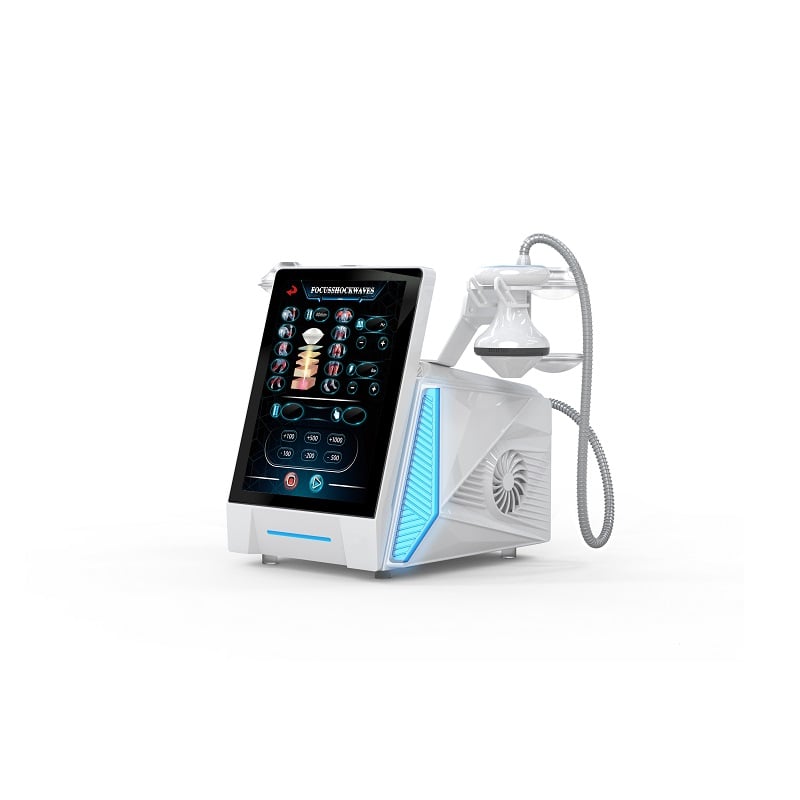
The key difference is that muscle treatment often addresses a broader, changeable area of tenderness or movement restriction, while tendon treatment typically targets a more localized attachment or tendon segment. Extracorporeal shockwave therapy can be adapted to either situation, but effective musculoskeletal therapy depends on accurate diagnosis, suitable energy delivery, and clear review of symptoms and function.
Muscle symptoms may follow overload, repetitive work, training, or a period of reduced movement. The painful region can be diffuse, and tenderness may shift as the patient moves. A shockwave therapy machine can support treatment of a defined muscle region, while extracorporeal shockwave therapy is considered alongside mobility, strength, and the suspected cause rather than used as a stand-alone answer.
Clinicians first distinguish local muscle sensitivity from referred pain, joint restriction, or another condition. A radial shockwave device may be selected when the treatment area is relatively broad and superficial, but the clinician must match the applicator and energy to the patient and site. In musculoskeletal therapy, recording the location and response helps keep each session consistent and avoids chasing tenderness without a clinical rationale.
Muscle care is usually integrated with graded movement and loading. The clinician can reassess whether daily tasks, range of motion, or exercise tolerance change after treatment. A shockwave therapy machine should not be used to justify ignoring worsening pain or unexplained symptoms. Extracorporeal shockwave therapy is one option within a plan, with the radial shockwave device used only when its delivery profile fits the target.
Tendon complaints more often involve a recognizable tendon segment or its attachment, with symptoms linked to loading. Assessment needs to identify the specific structure and determine whether the problem is appropriate for this modality. A shockwave therapy machine may be configured for a smaller target, and musculoskeletal therapy should pair symptom care with a considered loading plan rather than treating a painful point in isolation.
The clinician considers tendon depth, nearby anatomy, sensitivity, and the patient’s tolerance before choosing delivery. Extracorporeal shockwave therapy is not interchangeable across every tendon or presentation. A radial shockwave device delivers energy differently from a focused approach, so selection should follow the treatment objective and site, not the assumption that one device suits every tendon condition.
Tendon rehabilitation commonly requires progressive loading over time, adjusted to symptoms and function. The treatment response is therefore judged alongside capacity for relevant tasks, not only immediate tenderness. Musculoskeletal therapy can include education on activity modification and gradual return to demand. Clinicians should explain that a shockwave therapy machine does not replace diagnosis, exercise planning, or follow-up when progress is limited.
The practical choice begins with a clear target: broad muscle tissue, a localized tendon, or a defined attachment. A shockwave therapy machine should allow the clinician to select suitable settings and applicators for the intended site. Extracorporeal shockwave therapy describes the treatment category, not a single protocol, and the radial shockwave device is only suitable when its delivery characteristics match the clinical objective.
Before treatment, the clinician reviews history, examination findings, contraindications, and patient expectations. Energy, treatment area, and patient position should be considered together. For muscle, the radial shockwave device may be used across a measured region; tendon work generally calls for deliberate localization. Musculoskeletal therapy benefits from recording settings and response so later sessions can be assessed rather than repeated automatically.
Tolerance is an important guide, but a comfortable session alone does not prove that the target or plan is right. The clinician should explain expected sensations and invite feedback during treatment. Extracorporeal shockwave therapy may be paused or adjusted if the response is unsuitable. A shockwave therapy machine should be operated by trained personnel following its instructions and relevant clinical procedures.
Session planning should use a baseline that matters to the patient, such as lifting, walking, work tasks, or a sport-specific movement. A radial shockwave device may form one part of care, while exercise and activity adjustments address capacity. The clinician can document pain and function before and after a treatment phase to judge whether musculoskeletal therapy is meeting its stated aims.
Muscle cases may need review of movement quality and tolerance across a wider region. Tendon cases often require attention to the load that provokes symptoms and the progression of strengthening. Extracorporeal shockwave therapy should fit this distinction. The shockwave therapy machine provides a delivery method, while assessment determines whether to continue, modify, or reconsider the plan.
If symptoms do not improve as expected, clinicians should revisit the diagnosis, adherence, loading demands, and other contributors instead of simply increasing treatment. A radial shockwave device cannot correct an unsuitable rehabilitation progression. Within musculoskeletal therapy, a scheduled review supports safer decisions and helps clarify whether the treatment remains appropriate for the patient’s goals.
Patients should understand why a particular tissue is being treated and what change will be monitored. A shockwave therapy machine is not a substitute for a complete clinical assessment, and no single response is guaranteed. Extracorporeal shockwave therapy should be presented as one possible component of care, with realistic discussion of uncertainty, session planning, and the role of active rehabilitation.
For a muscle presentation, clinicians can describe how the treatment area was selected and how movement or task tolerance will be reviewed. For a tendon presentation, they can connect the target to the patient’s loading symptoms and exercise plan. The radial shockwave device should be used according to training and instructions, while musculoskeletal therapy remains guided by individual findings.
Clinics can improve consistency by documenting the indication, anatomical target, settings, patient feedback, and functional measures. This record supports continuity between visits and makes it easier to notice a mismatch between the chosen approach and the patient’s progress. Extracorporeal shockwave therapy is more useful as a considered clinical process than as an isolated device procedure.
Muscle versus tendon is a useful starting distinction, not a complete diagnosis. Symptoms may overlap, and the same patient can have more than one contributing factor. A shockwave therapy machine should therefore be used only after the clinician has identified a reasonable target and checked that the treatment fits the broader presentation.
The most defensible approach is to adapt treatment to tissue, location, tolerance, and functional goals. A radial shockwave device may suit some targets, while other cases call for another delivery choice or a different intervention. Musculoskeletal therapy should combine that decision with ongoing reassessment, patient communication, and an appropriate progression of activity.
In practice, the difference is not simply muscle settings versus tendon settings. It is a difference in how clinicians define the target, relate symptoms to loading, and judge progress. Extracorporeal shockwave therapy can be considered for both, but the shockwave therapy machine is only one part of a plan whose value depends on sound assessment and follow-through.
Yes. Muscle treatment may cover a broader, more variable area, while tendon treatment usually focuses on a defined structure and is coordinated with loading rehabilitation. The clinician selects the target and treatment plan after assessment.
No single delivery approach suits every tendon or patient. The clinician considers anatomy, target depth, presentation, and tolerance before choosing a device and settings. Extracorporeal shockwave therapy is not a substitute for diagnosis or rehabilitation.
Monitor relevant symptoms and functional tasks, such as movement, work demands, or exercise tolerance. A shockwave therapy machine should be part of a documented musculoskeletal therapy plan, with review guiding whether treatment continues or changes.

