

 EN

solving-the-overheating-risks-reported-in-endolaser-handpieces, solving-the-overheating-risks-reported-in-endolaser-handpieces, /blog
EN
Overheating in endolaser handpieces represents one of the most critical safety concerns in minimally invasive laser device operations today. Clinical teams and aesthetic practitioners rely heavily on precise thermal control to ensure patient safety, tissue preservation, and consistent treatment outcomes. When handpiece temperatures exceed safe operating thresholds, the risk of unintended thermal injury, fiber degradation, and device failure increases dramatically. Understanding the root causes of overheating and implementing targeted solutions is essential for any facility deploying advanced laser lipolysis fiber technology in their treatment protocols.
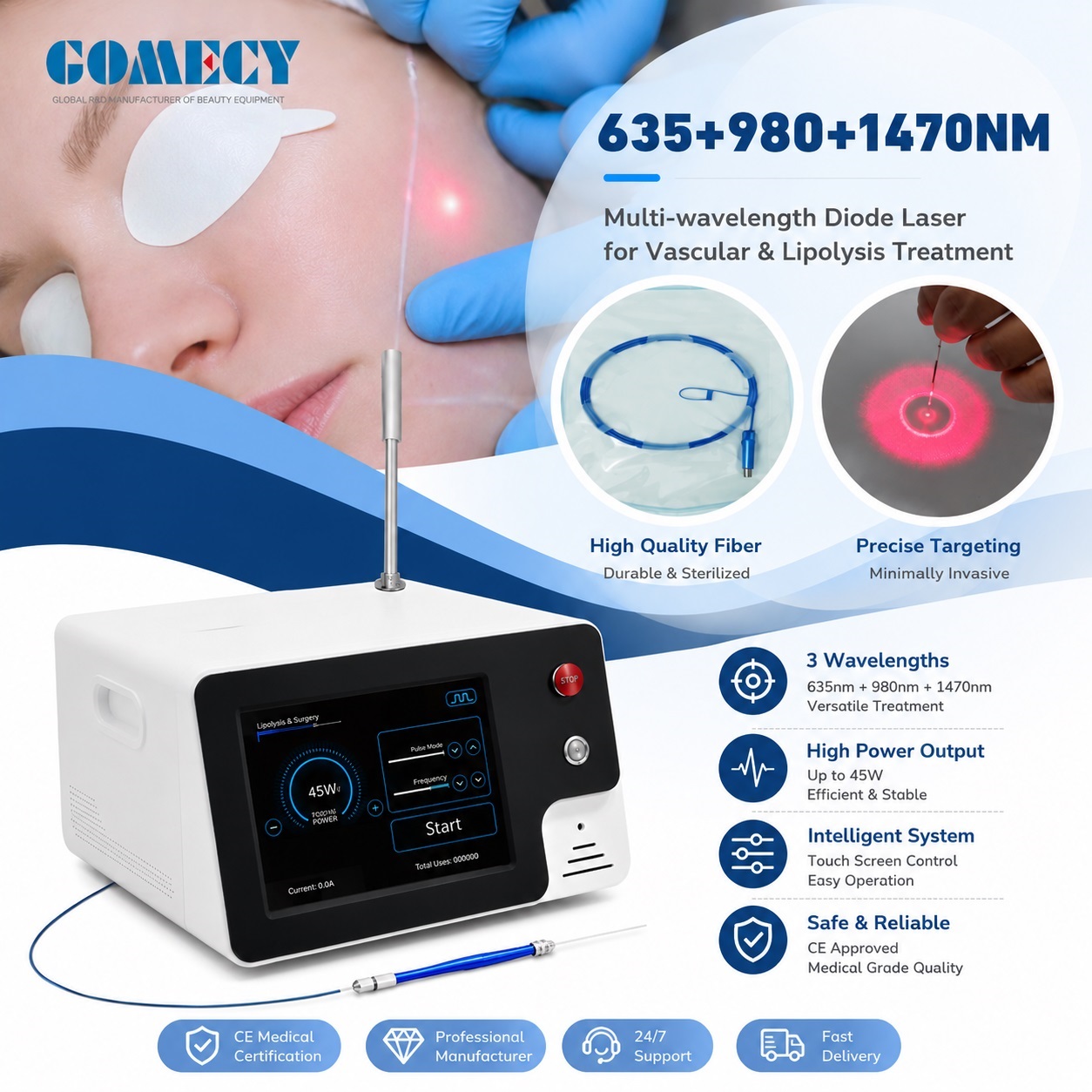
The thermal management challenges associated with endolaser systems demand a comprehensive, multi-layered approach. Handpiece overheating does not occur in isolation—it stems from interactions between fiber design, power settings, cooling mechanisms, and real-world clinical usage patterns. Addressing these risks requires not only understanding the mechanical and thermal dynamics but also establishing robust operational protocols, maintenance schedules, and staff training frameworks. This article explores the documented causes of overheating in minimally invasive laser device handpieces, examines practical prevention strategies, and outlines remediation steps that clinical teams can implement immediately to protect patient outcomes and extend equipment lifespan.
Laser lipolysis fiber operates by delivering focused light energy through an optical medium to target adipose tissue and structural fat deposits. During endolaser treatment, energy conversion at the fiber tip generates substantial heat, particularly when power levels exceed recommended thresholds or when contact time with tissue remains prolonged. The optical fiber itself absorbs some energy, and inefficient light transmission can cause localized heating within the handpiece body. Suboptimal fiber alignment or micro-fractures in the laser lipolysis fiber core further concentrate thermal stress at specific points, leading to rapid temperature escalation that handpiece cooling systems may not adequately dissipate.
Most minimally invasive laser device designs employ passive or active cooling to manage handpiece temperatures during extended procedures. However, many systems exhibit critical design limitations. Inadequate coolant flow rates, poorly positioned cooling channels, or insufficient thermal contact between the cooling system and the fiber delivery mechanism all contribute to thermal accumulation. In high-volume clinical settings where endolaser treatment sessions run consecutively without adequate rest periods between procedures, cooling systems become overwhelmed. The handpiece temperature can climb steadily throughout the day, eventually exceeding manufacturer safety limits even when individual treatment parameters remain within specification.
Practitioners sometimes increase power settings beyond recommended levels in an attempt to accelerate treatment or maximize immediate results. While higher power may seem clinically advantageous in the short term, it directly drives endolaser handpiece temperatures upward at a non-linear rate. The relationship between power and heat generation is multiplicative, not additive. Similarly, extended contact time with tissue during endolaser treatment sessions—particularly when performing large-volume procedures—accumulates thermal stress on the handpiece. Clinical teams must recognize that rapid temperature buildup may not trigger audible alarms until tissue-damaging levels are already reached, leaving a dangerous window where overheating occurs silently.
High-throughput aesthetic and surgical clinics often schedule minimally invasive laser device procedures back-to-back without inter-procedure rest periods. This operational pattern prevents handpiece temperatures from returning to baseline levels between treatments. Each successive laser lipolysis fiber application begins with a higher baseline temperature, accelerating the path to thermal limits. Additionally, poor maintenance practices—such as neglecting to clean cooling channels, failing to replace worn thermal interface materials, or using incompatible coolants—systematically degrade the effectiveness of thermal management systems. Clinics reporting the most severe endolaser overheating incidents frequently maintain insufficient preventive maintenance schedules.
The most direct approach to preventing overheating in minimally invasive laser device systems is strict adherence to manufacturer-recommended power settings and treatment duration parameters. Clinical evidence demonstrates that slightly lower power levels, when combined with deliberate hand speed and repeated passes, achieve clinically equivalent outcomes while reducing thermal stress. Implementing mandatory cool-down intervals between endolaser treatment sessions—even 10 to 15 minutes of idle time—allows handpiece temperatures to dissipate and cooling systems to recover capacity. Many facilities have successfully eliminated overheating incidents by rotating between multiple handpieces during the day, ensuring each laser lipolysis fiber device has sufficient rest before redeployment.
Preventive maintenance represents the most cost-effective long-term solution for thermal management. Establish a quarterly inspection protocol for all handpieces, including pressure testing of cooling circuits, replacement of thermal interface materials, and verification of fiber alignment. Ensure that coolant reservoirs are filled with approved fluids and that circulation pumps operate at specified flow rates. Replace laser lipolysis fiber segments that show visible wear, discoloration, or performance degradation, as compromised fibers generate excessive heat during endolaser treatment. Document all maintenance activities, handpiece temperature readings, and any thermal incidents in a centralized tracking system. This data-driven approach enables identification of problematic units before they cause patient harm.
Clinical teams must receive comprehensive training on thermal management principles specific to minimally invasive laser device operations. Operators should understand the relationship between power, exposure duration, and handpiece temperature. Implement continuous temperature monitoring using real-time displays or alert systems that provide immediate feedback during endolaser treatment. Some advanced systems now feature automated power reduction algorithms that prevent temperatures from exceeding safe thresholds. Establish a culture where staff members feel empowered to pause procedures and allow cooling when they observe rising handpiece temperatures, even if formal alarms have not triggered. This proactive approach transforms thermal awareness from a compliance checkbox into an embedded clinical practice.
Clinical operators typically notice gradual performance degradation, including reduced beam intensity, visible discoloration or fogging of the handpiece window, intermittent power fluctuations, or audible buzzing from the cooling system. Some minimally invasive laser device systems emit visual or acoustic alerts when temperatures approach critical levels. However, overheating can progress silently in systems without real-time monitoring, making regular temperature checks essential during endolaser treatment sessions, particularly during high-volume days.
Excessive handpiece temperatures compromise patient safety by increasing the risk of thermal burns to surrounding tissue beyond the intended treatment zone. Overheating can also degrade the laser lipolysis fiber itself, causing internal fractures that scatter light erratically and reduce treatment precision. For endolaser treatment procedures, this translates to unpredictable energy delivery, suboptimal fat ablation, and potential complications including incomplete treatment, prolonged recovery times, and aesthetic dissatisfaction. In severe cases, thermal runaway can cause handpiece failure mid-procedure, forcing treatment abandonment and rescheduling.
Many older endolaser systems can benefit from retrofit cooling upgrades, including enhanced pump systems, expanded cooling channels, or auxiliary external cooling units. Replacement of the laser lipolysis fiber with newer low-thermal variants also helps reduce heat generation. However, retrofits should only be performed by authorized service technicians following manufacturer guidance. In some cases, upgrading to newer minimally invasive laser device models with integrated thermal control systems proves more cost-effective and reliable than attempting major modifications to aging platforms. Facilities should consult their equipment supplier to assess retrofit feasibility for their specific endolaser configuration.

