

 EN

tecar-vs-radiofrequency-ablation-depth-and-treatment-intent, tecar-vs-radiofrequency-ablation-depth-and-treatment-intent, /blog
EN
TECAR and radiofrequency ablation both use radiofrequency energy, but they are designed for different treatment intentions. In physiotherapy, tecar therapy is used to support rehabilitation by transferring energy into tissue; ablation is a medical procedure intended to create a controlled lesion in a specific target. Understanding the difference between energy delivery, treatment depth, and clinical goal helps teams avoid treating these approaches as interchangeable.
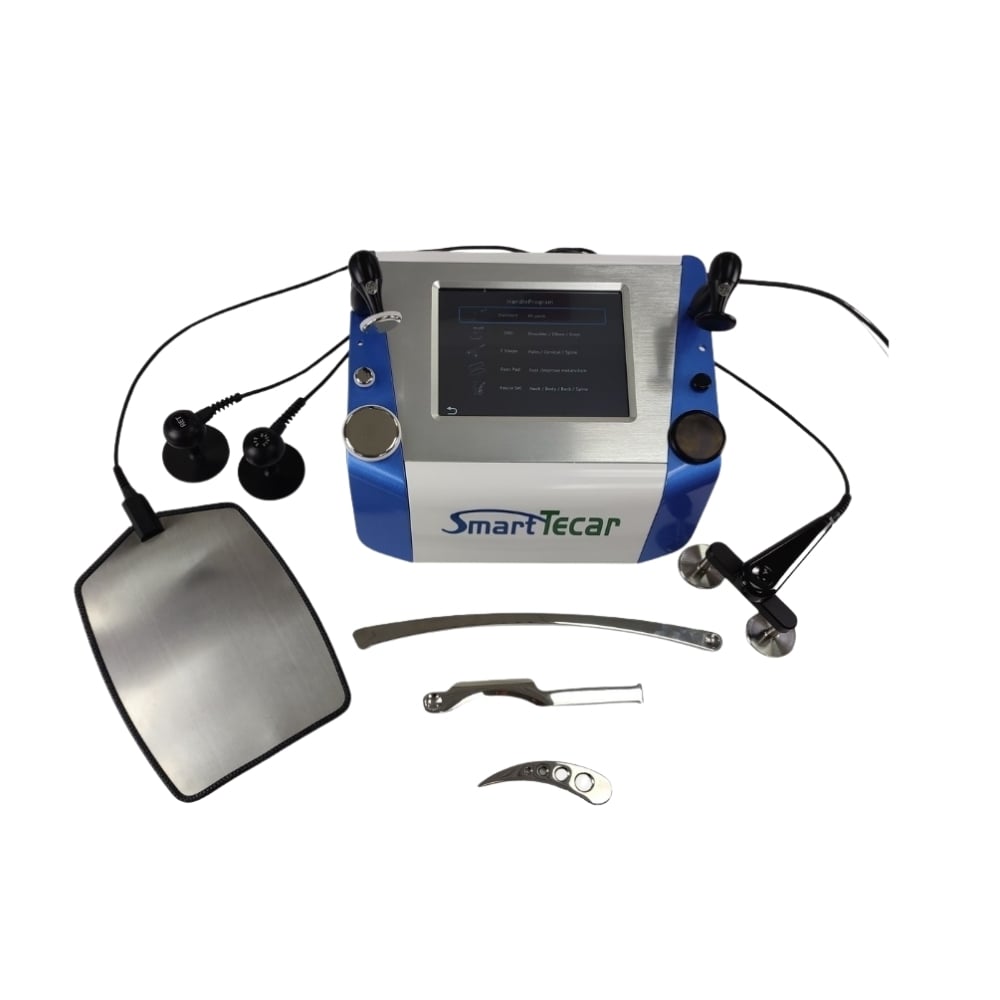
The practical distinction is not simply superficial versus deep heating. A tecar therapy session typically aims to produce a tolerable thermal or nonthermal response across a treatment area, while ablation concentrates energy to alter selected tissue. Capacitive resistive electric transfer describes a physiotherapy energy-delivery approach, not a synonym for an ablative procedure. A deep heat therapy goal therefore does not, by itself, mean tissue destruction.
In rehabilitation, the clinician chooses an energy application to complement movement, manual techniques, or a broader recovery plan. Tecar therapy is generally applied over a region with an electrode and return plate, with settings and movement adjusted to the person and treatment objective. Capacitive resistive electric transfer is the named approach behind this style of application, while a radiofrequency therapy device may offer controls intended for physiotherapy rather than lesion creation.
The aim is to support a manageable response, such as local warming or improved tolerance of subsequent exercise, rather than to destroy tissue. Deep heat therapy describes a treatment intention or perceived thermal effect, not a guarantee that a specific anatomical structure will reach a particular temperature. The clinician must account for sensation, skin condition, anatomy, and the patient’s response throughout tecar therapy.
Capacitive resistive electric transfer commonly refers to two electrode modes that influence how energy is coupled into the treatment area. Capacitive application is often selected for more superficial, water-rich tissues, whereas resistive application may be chosen when targeting tissues with different electrical characteristics. These are practical descriptions, not fixed depth settings. The clinician still needs to select the electrode, movement, power, and duration appropriately for each tecar session.
Radiofrequency ablation has a different clinical purpose: controlled energy is delivered to a planned target to create a lesion or otherwise alter tissue. It is performed within a medical procedure, with target selection, imaging or other guidance when indicated, and procedural safeguards. A radiofrequency therapy device used for rehabilitation should not be confused with equipment and protocols designed for ablation simply because both involve radiofrequency energy.
This distinction also clarifies the word depth. Ablation seeks a defined effect at a selected target, while tecar therapy applies energy across a treatment area and relies on clinical adjustment. Deep heat therapy may be relevant to rehabilitation discussions, but it is not equivalent to intentional tissue coagulation. Capacitive resistive electric transfer supports a physiotherapy workflow; it does not turn that workflow into an invasive or lesion-forming treatment.
In practice, perceived warmth and tissue response vary with the applicator, contact, movement speed, selected output, treatment duration, and individual anatomy. Capacitive resistive electric transfer gives clinicians different ways to couple energy, but it should not be interpreted as a calibrated depth ruler. A radiofrequency therapy device may specify electrode options or operating modes, yet those features do not establish a universal treatment depth for every patient.
For this reason, tecar therapy planning starts with the clinical question rather than a promise to reach a certain number of millimeters. The clinician considers the location and size of the treatment area, the intended response, tissue sensitivity, and whether the patient can communicate discomfort. Deep heat therapy is best treated as a carefully monitored objective, not a reason to raise intensity without reassessing comfort and clinical suitability.
Ablation depth, by contrast, is linked to the procedural target and the method used to deliver energy. Clinicians plan the lesion effect according to anatomy, indication, and procedural guidance, then assess the result in that context. It is therefore misleading to compare an ablation target directly with the broad area warmed during tecar therapy. Capacitive resistive electric transfer is a mode of physiotherapy application, not a measure of how far energy travels in all conditions.
During noninvasive rehabilitation, monitoring includes communication, observation of the skin and patient response, and adjustment of the application. A radiofrequency therapy device should be used within its instructions and the clinician’s training, with precautions reviewed before treatment. Deep heat therapy may not be suitable in every circumstance, so screening and conservative parameter selection matter more than assuming that a particular mode is automatically safe.
An ablative procedure requires a separate pathway, including an appropriate indication, informed consent, procedural planning, and monitoring suited to the intervention. That is not a higher-intensity version of tecar therapy; it has a different risk profile and intended tissue outcome. Capacitive resistive electric transfer in a rehabilitation setting should remain within its noninvasive use, with referral or medical assessment considered when the clinical problem calls for another intervention.
When the goal is to support a rehabilitation program, the decision is whether an adjunctive energy application fits the patient’s presentation and treatment plan. Tecar therapy may be considered alongside active care when the clinician judges it appropriate and can monitor the response. Deep heat therapy can describe one intended effect, but the broader plan should still define what progress means, such as improved functional tolerance or participation in exercise.
If the goal is to intentionally modify a specific tissue target, the question belongs to procedural assessment rather than routine physiotherapy selection. Capacitive resistive electric transfer should not be presented as an alternative method of ablation. A radiofrequency therapy device used in rehabilitation serves a different workflow from an ablative system, and the equipment name alone cannot establish its indication, risk, or intended outcome.
For equipment evaluation, look beyond the word radiofrequency. Confirm the device’s intended use, available application modes, electrode options, training requirements, contraindications, and maintenance documentation. A tecar unit may suit a service that needs adjustable physiotherapy applications, but suitability depends on the clinic’s protocols and patient population. The linked tecar equipment is presented for rehabilitation use; it should not be interpreted as an ablation system.
Clear communication helps patients understand that warmth is a possible sensation, not proof that treatment has reached a particular depth or changed a diagnosis. Explain why tecar therapy is being considered, what response will be monitored, and how it fits with exercise or other care. Deep heat therapy should be discussed without implying guaranteed outcomes, and treatment can be modified or stopped if the response is uncomfortable or unsuitable.
Documentation should connect the selected approach to an assessment, a specific objective, the parameters used, and the observed response. Record relevant precautions and any changes made during the session. This supports continuity across clinicians and makes it easier to judge whether capacitive resistive electric transfer is contributing meaningfully to the plan. If the problem requires a targeted medical procedure, explain that radiofrequency ablation needs separate assessment rather than substituting a physiotherapy device.
No. Tecar therapy is generally used as a noninvasive physiotherapy application, while ablation is intended to create a controlled tissue change at a selected target. Capacitive resistive electric transfer describes an energy-delivery approach for rehabilitation, not lesion creation. Deep heat therapy does not mean ablation.
No. The effect depends on the device, application, settings, tissue, and treatment purpose. A radiofrequency therapy device may be used in a rehabilitation context, but its name does not establish a uniform depth or guarantee warmth. Tecar therapy should be adjusted and monitored according to the person’s response.
Start with the intended clinical outcome and confirm the equipment’s stated use. Capacitive resistive electric transfer belongs to a physiotherapy application, whereas ablation follows a procedural pathway for a defined target. Deep heat therapy is a possible rehabilitation objective, not a substitute for procedural assessment or a claim of tissue destruction.

