

 EN

understanding-ablation-depth-control-in-fractional-co2-lasers, understanding-ablation-depth-control-in-fractional-co2-lasers, /blog
EN
Ablation depth control represents one of the most critical parameters in fractional CO2 laser operations, directly influencing treatment efficacy, safety, and patient outcomes. The ability to precisely manage how deeply the laser ablates tissue determines whether a fractional laser treatment achieves desired skin remodeling results or risks complications such as scarring, hyperpigmentation, or thermal damage. Understanding and mastering ablation depth control transforms a fractional CO2 laser from a general-purpose tool into a precision instrument capable of delivering consistent, predictable results across diverse clinical scenarios.
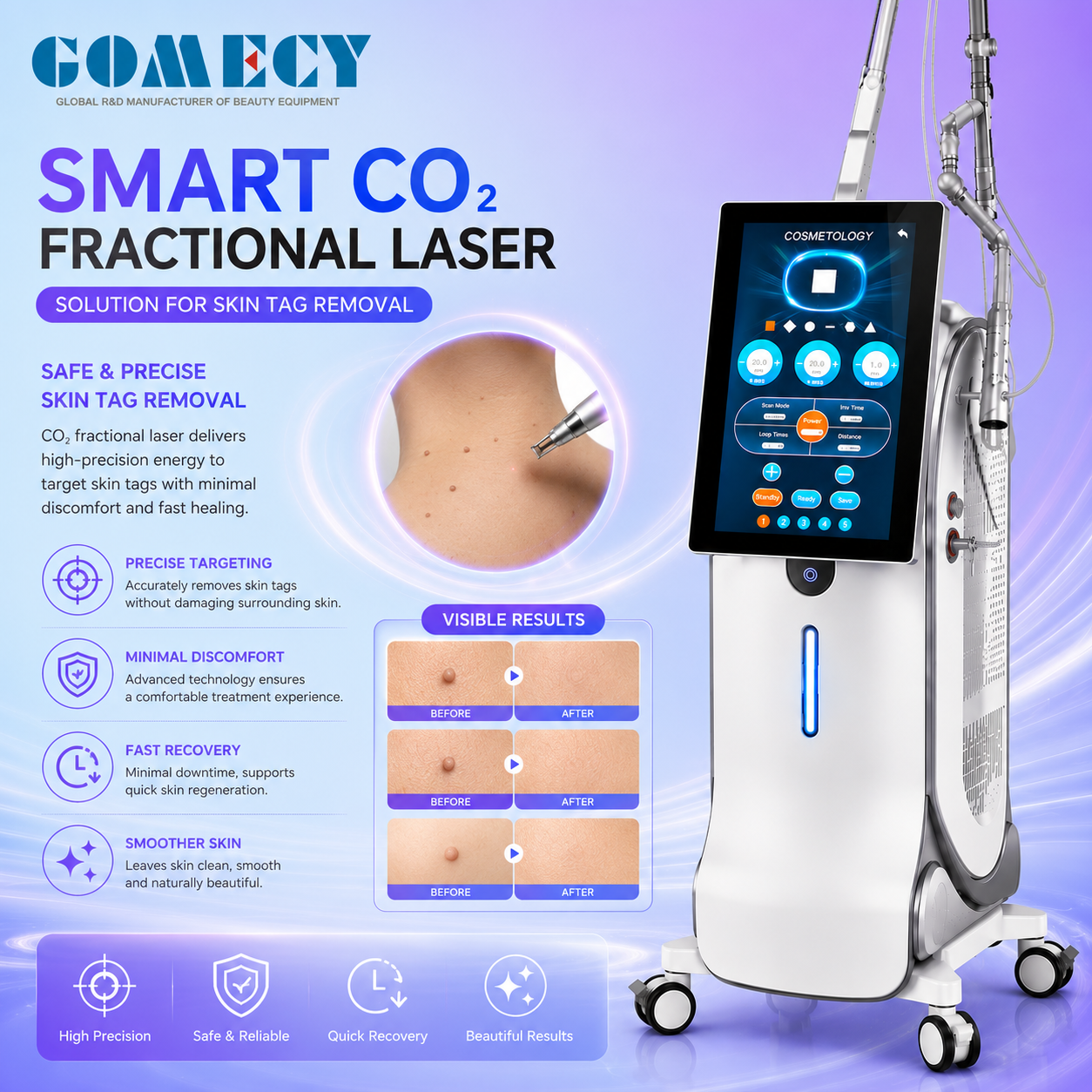
The physics of ablation depth depends on several interconnected variables including laser power output, pulse duration, beam spot size, and the specific tissue composition being treated. When clinicians understand how each parameter affects ablation depth, they gain the ability to customize co2 fractional resurfacing protocols for different skin conditions, depths of damage, and patient skin types. This knowledge forms the foundation for safe, effective fractional laser treatment protocols that deliver measurable clinical improvements while maintaining tissue integrity.
The fractional co2 laser operates by delivering concentrated photon energy that heats water molecules within tissue to the point of vaporization. This rapid heating creates controlled ablation zones where tissue is literally vaporized rather than cut or burned. The depth of penetration before vaporization occurs depends directly on the energy density delivered per unit area—measured in joules per square centimeter. Higher energy density concentrates more power into a smaller beam diameter, creating deeper ablation; lower energy density produces shallower ablation zones ideal for epidermal conditions.
Pulse duration profoundly influences how far thermal energy propagates through tissue before the vaporization event completes. Longer pulses allow thermal diffusion deeper into surrounding tissue, extending the zone of thermal injury beyond the primary ablation crater. Shorter, more precise pulses minimize lateral thermal spread, confining energy to the intended treatment depth and reducing collateral damage. Modern co2 fractional resurfacing systems offer adjustable pulse durations ranging from microseconds to milliseconds, enabling clinicians to fine-tune ablation depth with remarkable precision. The repetition rate—how many pulses fire per second—also affects cumulative thermal load and whether tissue has time to cool between pulses.
Adjusting laser power settings provides the most direct control over ablation depth in fractional laser treatment protocols. A 30-watt setting with a 100-micrometer spot diameter produces dramatically different ablation patterns than a 60-watt setting at the same spot size. Clinicians must also account for the fractional scanning pattern—the arrangement and spacing of individual laser dots across the treatment area. Denser scanning patterns with closer dot spacing create overlapping thermal zones that can extend ablation depth beyond what individual pulse parameters suggest. Conversely, widely spaced scanning produces shallower, more discrete ablation columns ideal for stimulating collagen remodeling without excessive tissue removal.
The target tissue itself significantly modulates actual ablation depth independent of laser settings. Scar tissue with altered collagen structure absorbs and dissipates laser energy differently than healthy skin, often requiring adjusted power or pulse settings to achieve comparable ablation depth. Melanin-rich skin types exhibit higher absorption of laser energy, potentially creating deeper ablation at identical settings compared to lighter skin types. Hydration status of the stratum corneum and presence of topical substances affect surface energy absorption and initial vaporization dynamics. These tissue variables mean that optimal ablation depth control requires clinical judgment and sometimes protocol adjustments between patients or even between treatment areas on a single patient.
Different skin conditions require distinctly different ablation depths for optimal outcomes. Superficial skin remodeling laser treatments for fine lines and textural irregularities typically target the papillary dermis at depths of 20 to 40 micrometers, requiring relatively low power settings and short pulse durations. Moderate photoaging and acne scar revision may require ablation depths of 60 to 150 micrometers extending into the mid-dermis to stimulate meaningful collagen remodeling. Deep wrinkles, significant scarring, or pronounced skin laxity may demand ablation depths approaching 200 to 300 micrometers. Precise ablation depth control ensures clinicians deliver therapeutic energy exactly where needed without unnecessary tissue damage that could result in prolonged healing, infection risk, or suboptimal results.
Excessive or uncontrolled ablation depth creates several serious complications including permanent scarring, hypertrophic healing response, and persistent erythema lasting months or years. Conversely, insufficient ablation depth fails to disrupt sufficient scar architecture or stimulate adequate collagen remodeling, leaving patients with inadequate clinical improvement. The thermal safety margin exists in the zone immediately beneath the primary ablation crater where collateral thermal injury occurs. By precisely controlling ablation depth through validated parameter settings, clinicians keep thermal injury zones confined to predictable, clinically beneficial depths that stimulate healing and remodeling without creating iatrogenic damage. This is why fractional laser treatment education emphasizes starting with conservative settings and progressing incrementally rather than applying maximum settings from initial treatment.
Modern co2 fractional resurfacing equipment increasingly incorporates real-time feedback mechanisms that provide information about ablation progress and tissue response. Some systems measure acoustic emission or thermal signatures to estimate ablation depth during active treatment, allowing immediate adjustment if results diverge from predicted parameters. Visual assessment remains critical—experienced clinicians observe subtle color and texture changes indicating ablation progression. The appearance of viable dermis with punctate bleeding confirms adequate ablation depth for many applications. Building this observational skill requires systematic training and progressive case exposure under supervision.
Many fractional laser treatment applications employ multiple passes over the same area rather than attempting to achieve desired ablation depth in a single pass. This staged approach offers several advantages: it distributes thermal load more gradually, reduces risk of excessive temperature accumulation, provides real-time feedback after each pass to adjust subsequent passes, and allows the clinician to safely reach deeper ablation zones than would be prudent in a single pass. For significant skin remodeling laser applications, dividing treatment across multiple sessions spaced weeks to months apart allows complete healing and tissue response observation between sessions. This conservative approach maximizes safety while still delivering comprehensive clinical improvement.
Ablation depth results from the combined interaction of laser power output, pulse duration, beam spot size, tissue composition, and cumulative thermal effects from multiple passes. No single parameter independently determines ablation depth—clinicians must consider all variables together. Starting with conservative settings and incrementally adjusting based on observed tissue response provides the safest path to consistent, predictable ablation depth control across different patient presentations.
Fractional laser treatment creates numerous small ablation columns separated by intact tissue bridges, compared to traditional full-beam resurfacing that ablates entire surface areas contiguously. The fractional pattern distributes thermal load and allows faster healing, but also allows more precise depth control by adjusting individual pulse parameters and spacing. Fractional CO2 laser systems inherently provide superior depth precision because the scanning pattern itself becomes an additional control variable independent of beam characteristics.
While deeper ablation does stimulate more aggressive collagen remodeling, excessively deep ablation creates disproportionate risk of scarring, infection, and prolonged healing complications that ultimately worsen rather than improve outcomes. Safe ablation depth control prioritizes achieving clinical endpoints with minimal collateral damage rather than maximizing depth. Multiple staged fractional laser treatment sessions with conservative depth targeting consistently deliver superior long-term results compared to single deep-ablation treatments.

