

 EN

understanding-electromagnetic-focusing-in-shockwave-generators, understanding-electromagnetic-focusing-in-shockwave-generators, /blog
EN
Electromagnetic focusing explains how a shockwave generator concentrates acoustic energy at a selected point rather than distributing it evenly across the treatment head. In focused shockwave therapy, understanding that energy path helps clinicians relate device settings to tissue depth, anatomy, and a patient’s treatment plan. The key is the relationship between the source, the focusing mechanism, and the intended target.
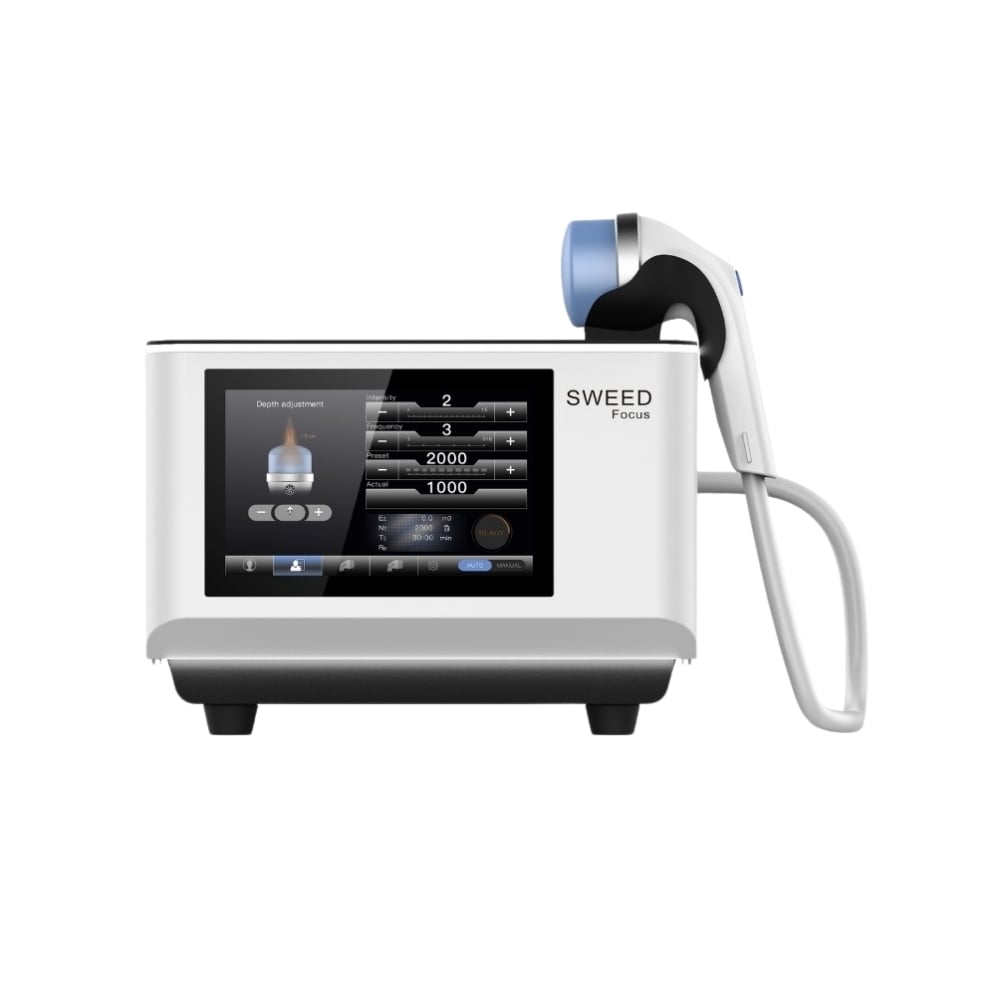
An electromagnetic generator converts an electrical pulse into mechanical motion, which creates a pressure wave in a coupling medium. A focused shockwave device then uses its geometry to bring wave energy toward a focal region. This differs from treating the device as a simple applicator: the position and depth of the focus influence how a clinician plans extracorporeal shockwave delivery and integrates it into orthopedic rehabilitation.
Inside an electromagnetic source, an electrical discharge energizes a coil and produces a magnetic field. That field drives a nearby membrane or projectile, creating a mechanical pulse that travels through a coupling medium. In focused shockwave therapy, the generator and treatment head are designed to direct this pulse into an acoustic wave with a defined path, rather than relying on electrical energy to act directly on tissue.
The term extracorporeal shockwave describes a pressure wave generated outside the body and transmitted through the skin. Effective transmission depends on good contact between the applicator and the skin, often supported by a suitable coupling gel. Air gaps can interrupt energy transfer, so clinicians pay attention to contact, positioning, and the patient’s comfort as part of a controlled treatment setup.
The wave becomes focused because the treatment head shapes and directs its propagation. Depending on the design, reflected or geometrically guided wave components converge around a focal region. A focused shockwave device is therefore not defined only by its energy source; the head, coupling interface, and focal geometry all contribute to where the wave concentrates.
The focus is a region rather than a pinpoint with identical energy at every location. Its dimensions and depth affect how energy is distributed around the target. For orthopedic rehabilitation, this distinction matters when a clinician considers whether the intended tissue is superficial or deeper and aligns the applicator with the relevant anatomy. Extracorporeal shockwave planning should account for both the focal location and the surrounding tissues.
A generator may allow adjustment of output energy, pulse frequency, and treatment parameters. These settings describe how the device is operated, but they do not independently guarantee a particular clinical response. In focused shockwave therapy, the clinician must interpret device controls alongside the treatment objective, patient presentation, and manufacturer instructions. The selected setting should be documented so that sessions can be delivered consistently.
Focal depth determines where the region of greatest concentration sits relative to the applicator. A focused shockwave device with adjustable focal depth can offer flexibility when target anatomy varies, but adjustment requires accurate positioning and a clear understanding of the device’s specifications. Extracorporeal shockwave application is most coherent when the chosen depth, applicator angle, and patient position are considered together.
Clinicians should distinguish a displayed setting from a direct measurement of energy inside a specific patient’s tissue. Anatomy, tissue interfaces, and contact conditions can influence transmission. For orthopedic rehabilitation, the practical aim is to select a suitable setup, apply it consistently, and monitor the patient rather than assume that a setting alone predicts the result. Focused shockwave therapy remains a clinical intervention, not a mechanical setting in isolation.
Before treatment, the operator can confirm that the applicator is appropriate, the coupling surface is clean, and the device is configured according to its operating guidance. The patient’s positioning should allow stable contact and access to the intended area. A focused shockwave device should be operated by trained personnel who understand the controls, indications, precautions, and local clinical protocols.
During a session, communication helps the clinician assess comfort and respond if the patient reports an unexpected sensation. This does not replace clinical monitoring, but it supports a measured workflow. Extracorporeal shockwave procedures should follow applicable professional guidance, including screening for contraindications and recording relevant treatment details. Clear documentation supports continuity when care is delivered over multiple visits.
The equipment’s stated focal range and energy controls should be checked against the specific treatment objective, not treated as universal instructions. Focused shockwave therapy may be used in different clinical contexts, so protocols should reflect the clinician’s assessment and the device documentation. A consistent workflow also makes it easier to review whether positioning, settings, and patient response changed between appointments.
Choosing a focal position starts with identifying the intended anatomical target and understanding its depth. The clinician then considers patient position, applicator access, and whether the treatment plan calls for a focused or another type of acoustic approach. In orthopedic rehabilitation, that reasoning links the equipment’s focusing capability to an individualized plan rather than using the same setup for every complaint.
A focused shockwave device can support targeted delivery, but targeting depends on operator technique as well as design. Palpation, anatomical knowledge, and any relevant assessment findings inform placement. The treatment head should be held in stable contact, and the selected focal depth should be consistent with the target. Extracorporeal shockwave energy should not be directed based on a device display alone.
Patient response is another part of clinical interpretation. A clinician can explain the purpose of the procedure, describe what sensations may occur, and invite feedback during treatment. Focused shockwave therapy should fit into a broader care plan when appropriate, with progress evaluated against functional goals and the patient’s presentation rather than assumed from the technology itself.
Electromagnetic focusing describes a physical delivery mechanism; it does not establish that every condition is suitable for treatment or that one protocol fits all patients. Clinical decisions must account for diagnosis, relevant precautions, evidence, and professional scope. For orthopedic rehabilitation, the device is one element of care, and any use should be justified by the assessment and the intended role of the intervention.
Documentation can include the treatment site, applicator, focal depth or other selected settings, session details, and patient response. This record helps clinicians communicate and evaluate changes over time. It also supports a thoughtful review if comfort, access, or treatment goals require adjustment. Extracorporeal shockwave use should follow current device instructions and applicable clinical standards.
A clear grasp of electromagnetic focusing helps teams ask practical questions about energy generation, focal geometry, and target depth. It also encourages operators to check whether the planned setup is appropriate for the patient and treatment objective. When focused shockwave therapy is considered within an informed clinical workflow, technical understanding can support more deliberate positioning, consistent application, and meaningful follow-up.
An electrical pulse energizes a coil, producing a magnetic field that moves a membrane or projectile. The resulting pressure wave travels through the coupling medium, while the treatment head guides energy toward a focal region. Focused shockwave therapy depends on this combined source-and-geometry process.
No. A focal region has dimensions, and energy distribution varies around it. A focused shockwave device’s specifications help describe its characteristics, but anatomy and contact affect practical delivery. Clinicians consider extracorporeal shockwave positioning and patient response rather than interpreting depth as a guaranteed point of action.
Understanding the mechanism helps clinicians connect device setup with the intended treatment area, communicate clearly, and document decisions. In orthopedic rehabilitation, that technical knowledge supports informed use, but does not replace assessment, safety screening, or an individualized plan for focused shockwave therapy.

