

 EN

understanding-fractional-photothermolysis-in-co2-resurfacing, understanding-fractional-photothermolysis-in-co2-resurfacing, /blog
EN
Fractional photothermolysis represents a fundamental shift in how dermatologists and aesthetic practitioners approach skin renewal. Unlike traditional laser treatments that target the entire skin surface uniformly, this advanced technique uses concentrated beams to treat only a fraction of the skin at a time, leaving surrounding tissue intact. The fractional co2 laser has become the gold standard for professionals seeking precise, controlled skin remodeling with reduced downtime and predictable clinical outcomes.
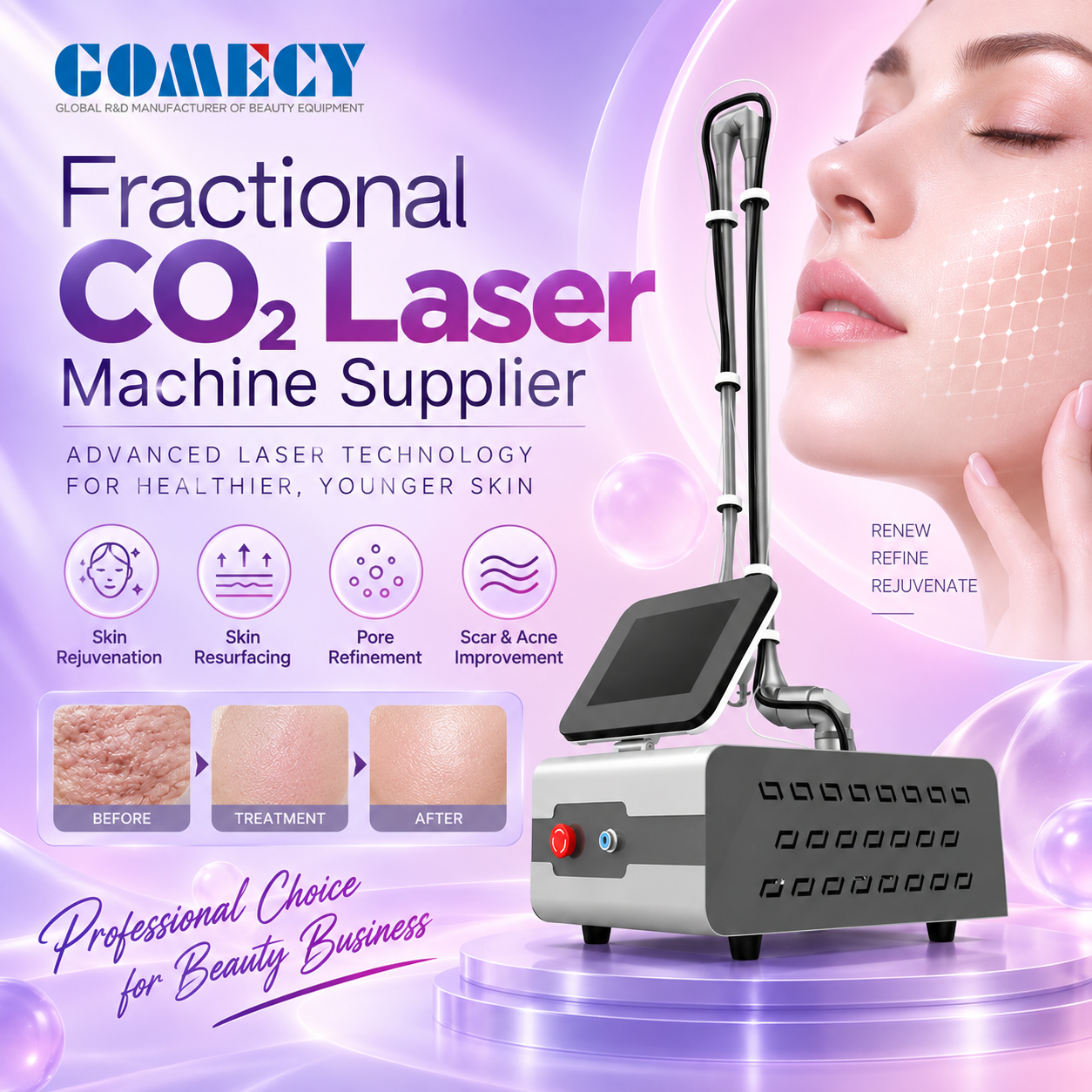
Understanding the mechanics behind fractional photothermolysis helps practitioners and patients alike appreciate why co2 fractional resurfacing has transformed aesthetic medicine. The technology works by creating thousands of microscopic treatment zones—columns of controlled thermal damage—that trigger the body's natural healing response. This approach to fractional laser treatment allows the skin to remodel itself from within while maintaining a protective barrier of untreated skin that accelerates recovery. The result is visible improvement in texture, tone, and appearance without the extended healing periods associated with older ablative methods.
Fractional photothermolysis uses the precise absorption of 10,600 nm infrared light by water in skin tissue to create controlled microscopic treatment zones, typically 100–200 micrometers wide, in a grid pattern. Unlike full-field ablation, fractional CO2 laser treatment leaves much of the surrounding skin intact, providing healthy cells that support rapid re-epithelialization and reduce downtime. The controlled thermal injury also triggers collagen remodeling and neocollagenesis, combining precise tissue treatment with progressive skin regeneration. This balance of thermal stimulation and tissue preservation is central to the refined results of fractional CO2 resurfacing.
Modern fractional laser treatment systems employ sophisticated scanning patterns and energy modulation to ensure consistent, predictable results. The fractional co2 laser uses a scanning handpiece that automatically positions microbeams in a geometric array, typically delivering 5 to 25 millijoules per microbeam depending on clinical objectives. Practitioners can adjust treatment parameters—including pulse energy, pulse duration, and spacing between zones—to customize the thermal dose delivered to each patient's skin. This precision control is essential for achieving optimal skin remodeling laser outcomes while maintaining safety margins and minimizing adverse effects like erythema or temporary edema.
Co2 fractional resurfacing addresses a broad spectrum of aesthetic and medical skin concerns that compromise appearance or function. Fine lines and wrinkles respond exceptionally well because the fractional laser treatment stimulates deep collagen remodeling that persists for months after initial healing. Acne scars—both atrophic and hypertrophic—benefit from the controlled thermal remodeling that gradually restores normal skin architecture. Surgical scars, stretch marks, and pigmentary irregularities also show marked improvement, as fractional photothermolysis resets the skin's structural organization. Professional practitioners recognize that the fractional co2 laser offers versatility across Fitzpatrick skin types when energy parameters and interval protocols are carefully selected.
Beyond aesthetic improvement, fractional laser treatment serves important medical functions in dermatology. Patients with photodamaged skin benefit substantially, as the technology targets both visible damage and subclinical solar elastosis within the dermis. Melasma and post-inflammatory hyperpigmentation respond to the ablative and remodeling action of the fractional co2 laser applied in lower-energy settings. Surgical candidates often undergo co2 fractional resurfacing prior to major procedures to improve baseline skin quality, ensuring optimal surgical outcomes and aesthetic results. The range of treatable conditions demonstrates why fractional photothermolysis has become integral to modern aesthetic practice.
Patients undergoing fractional laser treatment typically experience visible results that progress over several months as collagen remodeling continues. Immediate post-treatment erythema and edema peak within 24 to 48 hours, then gradually resolve over one to two weeks for most fractional co2 laser applications. Unlike older ablative resurfacing, which required strict wound care and weeks of visible healing, co2 fractional resurfacing allows patients to resume most daily activities within three to seven days. Fine lines often appear softened after the first treatment, while deeper concerns like significant scarring or severe photodamage typically benefit from a series of two to four treatments spaced four to six weeks apart for optimal skin remodeling laser results.
The fractional photothermolysis approach minimizes serious complications because incomplete treatment of the skin surface preserves the natural healing barrier. Infection risk is substantially lower than with traditional full-field ablation, and hypopigmentation or persistent erythema occur rarely when proper energy parameters and post-treatment protocols are followed. Patient satisfaction with fractional co2 laser treatments remains high because results appear natural and progressive—skin gradually improves rather than showing sudden, sometimes artificial-appearing change. This combination of efficacy, safety, and predictable recovery makes fractional laser treatment increasingly popular among both practitioners and patients seeking authentic skin renewal.
Practitioners selecting fractional co2 laser systems must evaluate several critical specifications to ensure appropriate clinical performance. Power output capabilities determine the range of achievable thermal effects—systems typically range from 10 to 80 watts, with higher wattage allowing faster treatment times and deeper penetration for aggressive co2 fractional resurfacing applications. The scanning technology employed significantly affects treatment precision and uniformity; modern systems use computer-controlled scanners that automatically maintain consistent spacing and energy delivery across the entire treatment area. Practitioners must also assess safety features, including integrated cooling systems, real-time feedback mechanisms, and user interface clarity to ensure consistent fractional laser treatment delivery across diverse patient populations and clinical indications.
Beam characteristics—including spot size, pulse duration, and wavelength stability—directly influence the depth and specificity of skin remodeling laser effects. Fractional photothermolysis systems using true 10,600-nanometer CO2 wavelengths achieve predictable ablation and coagulation compared to other laser types. The fractional co2 laser's ability to generate both ablative and thermal effects in a single pass makes it superior for comprehensive skin remodeling compared to fractional laser treatment systems operating at other wavelengths. Investment in technology that offers flexible parameter adjustment allows practitioners to tailor co2 fractional resurfacing protocols to individual patient needs while maintaining safety and optimizing aesthetic outcomes.
Competent fractional co2 laser operation requires thorough training in system mechanics, treatment planning, parameter selection, and complication recognition. Practitioners must understand how variables like pulse energy, dwell time, and treatment density influence thermal dose and clinical outcomes for fractional photothermolysis procedures. Pre-treatment assessment should include Fitzpatrick skin type determination, detailed history of photosensitivity medications or conditions, and baseline photography for objective outcome documentation. The fractional laser treatment protocol must specify exact system settings, pass patterns, cooling intervals, and post-treatment care instructions to ensure reproducible, safe results across all treated patients.
Post-treatment care protocols substantially influence recovery timeline and final outcomes following co2 fractional resurfacing. Practitioners must educate patients on sun protection, appropriate cleansing techniques, and signs requiring clinical follow-up—such as persistent erythema beyond two weeks or signs of infection. Interval scheduling between fractional laser treatment sessions should allow sufficient healing and collagen remodeling while maintaining treatment momentum toward the patient's aesthetic goals. Documentation of treatment parameters, energy settings, and clinical response creates accountability and enables continuous protocol refinement. Practitioners who implement rigorous training and standardized protocols consistently achieve superior fractional photothermolysis outcomes while minimizing adverse events.
Fractional photothermolysis treats only a fraction of the skin surface, leaving islands of untreated skin that promote rapid healing and preserve the barrier function. Traditional ablative resurfacing removes the entire epidermis and portions of the dermis, requiring weeks of visible healing and creating higher infection and pigmentation risks. The fractional co2 laser approach delivers comparable results for most indications with dramatically reduced downtime, making co2 fractional resurfacing the preferred choice for patients seeking effective skin remodeling laser treatment without extended recovery.
Most patients achieve significant improvement with a single fractional photothermolysis session, while deeper concerns like moderate-to-severe scarring typically benefit from two to four treatments spaced four to six weeks apart. The fractional co2 laser's progressive collagen remodeling means results continue improving for three to six months following each treatment. Individual factors—including skin condition severity, skin type, age, and aesthetic goals—influence the optimal number of co2 fractional resurfacing sessions. Practitioners customize fractional laser treatment protocols based on baseline assessment and interim results to achieve each patient's desired outcome.
Active infection, recent isotretinoin use, severe photosensitivity, and certain wound-healing disorders represent important contraindications for fractional photothermolysis. Darker skin types require modified fractional co2 laser parameters to minimize risk of post-inflammatory hyperpigmentation, though appropriate co2 fractional resurfacing is safe and effective when protocols are adjusted accordingly. Patients with unrealistic expectations or inability to comply with post-treatment care instructions may not be suitable candidates for fractional laser treatment. A thorough pre-treatment consultation allows practitioners to identify limitations, establish appropriate expectations, and determine whether skin remodeling laser treatment is the optimal choice for each individual patient.

