

 EN

understanding-wavelength-penetration-in-endolaser-lipolysis, understanding-wavelength-penetration-in-endolaser-lipolysis, /blog
EN
Wavelength penetration is a fundamental principle that determines the clinical success of endolaser procedures. The depth at which laser energy reaches adipose tissue directly influences fat dissolution efficiency, hemostasis, and skin tightening outcomes. Understanding this relationship is essential for practitioners and facility managers evaluating minimally invasive laser devices for body contouring programs. Wavelength selection, tissue optical properties, and energy delivery mechanics all converge to determine clinical results.
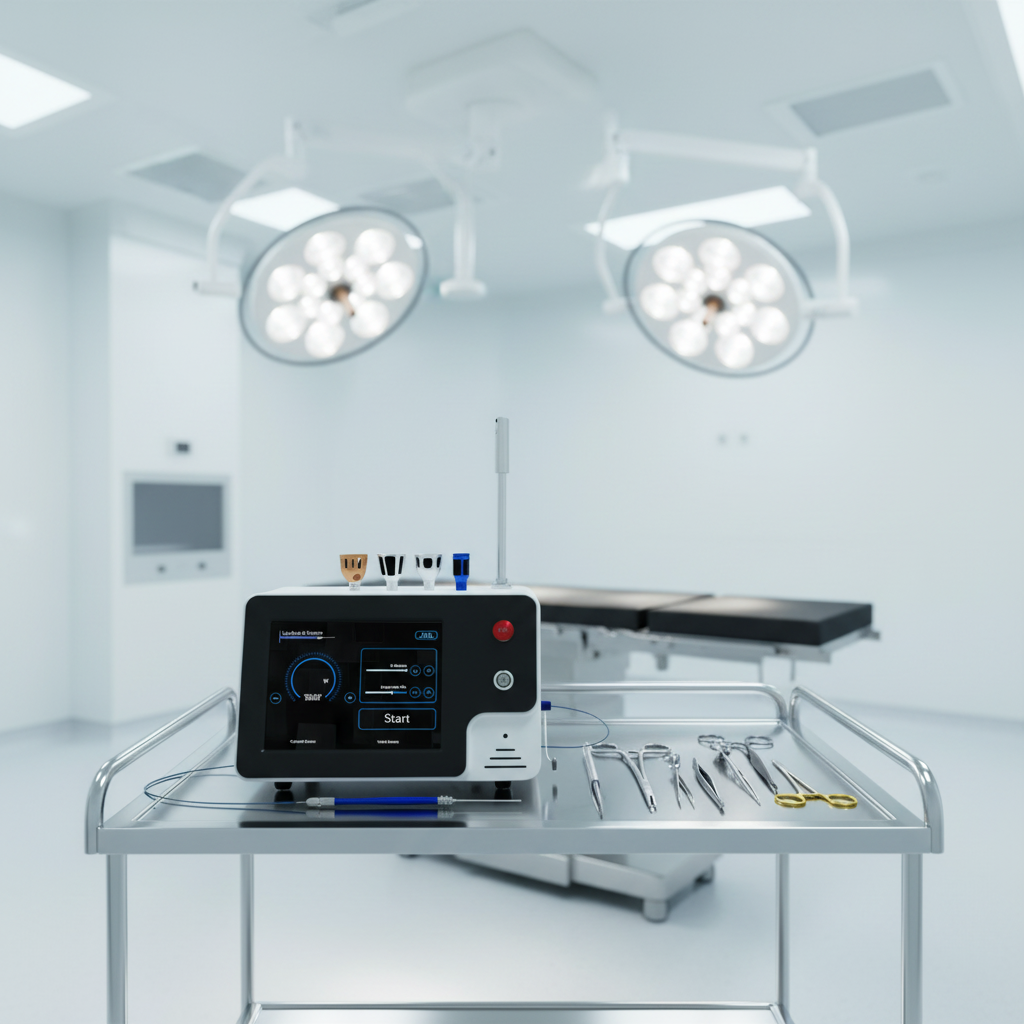
Endolaser treatment relies on precise wavelength selection to achieve penetration depth that targets subcutaneous fat layers without excessive thermal diffusion to surrounding tissues. Modern laser lipolysis fiber technology has evolved to deliver multiple wavelengths simultaneously, optimizing fat emulsification while managing thermal side effects. This article examines the physics of wavelength penetration, the role of minimally invasive laser device design, and practical clinical implications for achieving predictable aesthetic outcomes.
Wavelength penetration in tissue depends on two competing optical phenomena: absorption and scattering. Longer wavelengths, such as 1064 nanometers, penetrate deeper into fatty tissue because they experience less scattering by tissue molecules. Shorter wavelengths, such as 532 nanometers, are absorbed more readily by hemoglobin and melanin, limiting penetration depth but improving surface effects. An endolaser system must balance these properties to reach the target adipose compartment while minimizing collateral thermal injury. The laser lipolysis fiber acts as the critical delivery interface, directing energy to the precise anatomical plane where fat reduction is desired.
Wavelength selection in endolaser treatment also governs hemostasis and vascular sealing during the procedure. Wavelengths with high absorption in hemoglobin, such as 1320 nanometers, create rapid vessel coagulation with minimal charring, reducing intraoperative bleeding and bruising. When a minimally invasive laser device integrates multiple wavelengths, clinicians gain flexibility to address different tissue types within a single treatment session. The laser lipolysis fiber delivery mechanism ensures energy reaches the target zone at optimal intensity, preventing excessive thermal diffusion that could cause burns or delayed tissue necrosis. This controlled thermal environment is critical for patient safety and recovery predictability.
Modern laser lipolysis fiber architecture determines how wavelength energy is distributed in adipose tissue. Radial fibers emit energy circumferentially, creating a spherical zone of fat disruption around the fiber tip. Directional fibers concentrate energy into a forward-facing beam, allowing precise layer-by-layer fat removal. Endolaser systems employing side-firing laser lipolysis fiber technology enable practitioners to treat larger areas efficiently while maintaining hemostatic control. The minimally invasive laser device design must account for fiber optical properties, thermal conductivity, and tissue response characteristics specific to each wavelength band. Proper fiber selection directly impacts procedural efficiency, patient satisfaction, and complication rates.
Advanced endolaser treatment platforms deliver three to six wavelengths simultaneously, optimizing penetration depth across different tissue planes. A typical configuration combines 1064 nanometers for deep fat penetration, 1320 nanometers for vascular hemostasis, and shorter wavelengths for superficial skin tightening effects. This multi-modal approach within a single laser lipolysis fiber platform enhances treatment versatility and clinical outcomes. When wavelengths work synergistically through the minimally invasive laser device, practitioners achieve superior fat removal, reduced bruising, and improved skin retraction without requiring multiple procedures or extended downtime. Wavelength penetration depth becomes a strategic advantage rather than a limitation, allowing customized energy delivery based on patient anatomy and treatment goals.
Endolaser penetration depth must be tailored to anatomical zone characteristics. Superficial fat layers, such as those in the neck or arms, benefit from shorter-wavelength endolaser energy that targets fine fat emulsification and skin tightening. Deeper fat compartments in the abdomen or thighs require longer-wavelength penetration to reach dense adipose tissue effectively. A minimally invasive laser device with wavelength flexibility allows practitioners to modulate energy delivery based on subcutaneous thickness, fat density, and skin quality at each anatomical site. The laser lipolysis fiber's ability to penetrate to the correct depth prevents either incomplete fat removal or unintended thermal damage to deeper structures like muscle or nerves.
Endolaser treatment safety depends on understanding wavelength-specific penetration distances and setting energy parameters accordingly. Higher fluence settings increase penetration depth but also raise complication risk if applied to thin tissue zones. Lower fluence with extended dwell times creates more gradual heat accumulation, suitable for delicate areas. A minimally invasive laser device with wavelength penetration mapping capabilities enables practitioners to predict tissue thermal response and adjust treatment algorithms proactively. Modern laser lipolysis fiber systems include real-time feedback sensors monitoring skin surface temperature and subcutaneous thermal diffusion, ensuring practitioners maintain safety margins while optimizing fat removal efficiency. This precision transforms endolaser from a technique dependent on operator experience into a reproducible, data-driven procedure.
Wavelength penetration directly determines fat disruption efficiency, hemostasis quality, and skin tightening results. Longer wavelengths penetrate deeper to reach dense adipose tissue, while shorter wavelengths optimize surface effects and vascular sealing. An endolaser system using multiple wavelengths through a laser lipolysis fiber achieves superior fat emulsification across different tissue planes within a single treatment session. Improper wavelength selection leads to incomplete fat removal, excessive bruising, or thermal complications.
Laser lipolysis fiber geometry determines energy distribution patterns and effective penetration depth. Radial fibers emit energy circumferentially, suitable for treating larger fat zones, while directional fibers concentrate energy for precise layer-by-layer fat removal. A minimally invasive laser device with optimized laser lipolysis fiber design ensures wavelength energy reaches the target adipose compartment without excessive thermal diffusion to surrounding tissues, reducing complication rates and improving patient outcomes.
Yes, modern minimally invasive laser device platforms deliver multiple wavelengths with adjustable energy parameters, enabling anatomically customized endolaser treatment plans. Superficial fat zones benefit from shorter-wavelength penetration and lower energy, while deeper compartments require longer-wavelength penetration and higher energy settings. A laser lipolysis fiber system with wavelength flexibility and real-time thermal monitoring allows practitioners to tailor treatment to individual patient subcutaneous anatomy, tissue thickness, and fat density, significantly improving procedural predictability and patient satisfaction.

