

 EN

why-focused-shockwave-therapy-misses-deep-tendon-and-muscle-targets, why-focused-shockwave-therapy-misses-deep-tendon-and-muscle-targets, /blog
EN
Focused shockwave therapy can fail to influence a deep tendon or muscle target even when the device is operating normally. The usual issue is a mismatch between the intended tissue and the energy delivered there, not simply insufficient intensity. In orthopedic rehabilitation, accurate diagnosis, depth estimation, coupling, and treatment planning matter as much as selecting a device.
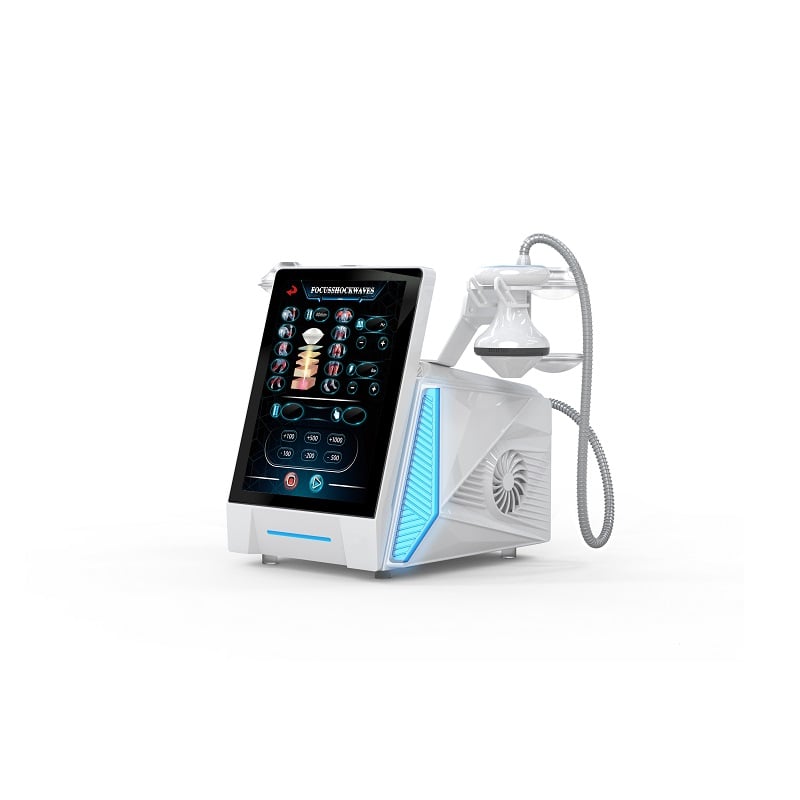
The phrase extracorporeal shockwave describes energy generated outside the body and transmitted through an applicator into tissue. Focused systems concentrate energy at a chosen depth, but that setting alone cannot confirm that the focal region overlaps a patient’s lesion. Understanding why deep targets are missed helps clinicians distinguish a targeting problem from a treatment that is simply not appropriate for the presentation.
Focused shockwave therapy depends on aligning the energy focus with the intended structure. A deep tendon may lie beneath skin, fat, fascia, and muscle, and those layers differ in thickness and acoustic properties. If the estimated target depth is wrong, the focal region may sit above or below the lesion. A focused shockwave device therefore needs to be used with an anatomical plan, not as a substitute for one.
Clinical landmarks are helpful but do not always reveal the precise position of a tendon insertion or muscle injury. Swelling, body composition, joint position, and individual anatomy can shift the relationship between a surface mark and the tissue underneath. Extracorporeal shockwave energy follows a path through those tissues, so a clinician should consider the full route rather than treating the skin location as the target itself.
Energy reaching a deep structure can differ from the energy selected at the console. Some energy is reflected, absorbed, or dispersed as it passes through tissue interfaces. The size and shape of the focal zone also matter: a small target may not overlap it well, while a broader region can include surrounding tissue. In orthopedic rehabilitation, this makes careful localization and realistic expectations essential.
A focused shockwave device may provide adjustable depth or energy settings, but the available controls do not eliminate uncertainty about tissue response. Higher output is not an automatic solution to a missed target. Increasing intensity without reassessing position can raise discomfort or expose nearby structures without improving accuracy. Extracorporeal shockwave treatment should be guided by the clinical objective and the patient’s tolerance, with adjustments made deliberately.
For focused shockwave therapy, stable applicator contact supports consistent energy transmission. Air gaps, inadequate coupling material, uneven pressure, or movement during delivery can disrupt the path from the applicator to the intended tissue. The clinician should check contact across the treatment area and position the applicator in line with the planned approach. A focused shockwave device cannot compensate for inconsistent coupling or a changing angle.
Positioning the patient can also change target access. A tendon may become easier to identify when the limb is supported in a particular posture, while muscle tension or joint rotation can move the target relative to the skin. In orthopedic rehabilitation, a repeatable position helps clinicians compare sessions and interpret the patient’s response. Extracorporeal shockwave delivery should be reconsidered if the patient shifts or the target becomes difficult to localize.
The best treatment plan starts with a clear clinical question: which structure is symptomatic, how deep is it, and is shockwave treatment suitable for that condition? A focused shockwave device should be configured according to the intended tissue and device guidance, rather than a generic protocol. If the suspected lesion is diffuse or poorly localized, a clinician may need more assessment before aiming energy at a single point.
Anatomical imaging may help clarify depth and location when examination alone leaves uncertainty, though its role depends on the case and clinical setting. It is also important to separate a targeting failure from other reasons for limited improvement, such as an incorrect diagnosis, an unsuitable treatment indication, or insufficient time to evaluate response. Extracorporeal shockwave care works within a broader orthopedic rehabilitation plan, not in isolation.
Before changing energy settings, confirm the diagnosis, target location, and estimated depth. Focused shockwave therapy is more defensible when the clinician can explain why the chosen site corresponds to the patient’s symptoms and examination findings. Recheck the patient’s position, applicator angle, and contact if the target is deep or close to a sensitive structure. A focused shockwave device should be adjusted only within its instructions and the practitioner’s scope.
During a session, patient feedback can guide reassessment, but discomfort alone does not prove that energy has reached the intended tissue. Ask about the location and character of sensation, observe for movement, and pause if the response is unexpected. In orthopedic rehabilitation, documenting the target, position, settings, and response makes subsequent sessions easier to review. Extracorporeal shockwave treatment should be stopped or modified when safety concerns arise.
A lack of progress should prompt a structured review rather than automatic escalation. Revisit the working diagnosis, target depth, application technique, treatment interval, and other care contributing to recovery. Focused shockwave therapy may not be appropriate for every deep pain complaint, and persistent symptoms can warrant further evaluation. A focused shockwave device is a tool; sound clinical reasoning determines whether and how it fits the case.
For a deep tendon or muscle target, practical accuracy comes from combining anatomical knowledge, careful positioning, consistent coupling, and appropriate device settings. Clinicians should follow device instructions, local protocols, and relevant contraindications. Extracorporeal shockwave therapy is one option within orthopedic rehabilitation, where exercise, load management, and reassessment may also be central. The purpose is not to force energy deeper, but to ensure the chosen intervention matches the tissue and clinical need.
No. Higher intensity does not correct an incorrect target location, poor coupling, or a mismatch between the focal depth and the lesion. Focused shockwave therapy should be planned around anatomy and patient tolerance. A focused shockwave device should only be adjusted within its operating guidance, with reassessment before increasing output.
Surface landmarks can guide examination, but tissue depth and anatomy vary. When the location remains uncertain, further assessment may be appropriate before treatment. Extracorporeal shockwave delivery depends on a considered path to the structure, and orthopedic rehabilitation planning should account for uncertainty instead of assuming a surface point represents the lesion.
Review the diagnosis, target, application technique, treatment suitability, and overall recovery plan. Do not assume that more energy is the answer. Focused shockwave therapy may need modification or may not fit the case; a focused shockwave device cannot replace clinical reassessment. Extracorporeal shockwave use should remain one considered part of orthopedic rehabilitation.

