

 EN

why-fractional-co2-results-vary-between-different-skin-types, why-fractional-co2-results-vary-between-different-skin-types, /blog
EN
The effectiveness of fractional CO2 laser treatments is not uniform across all patients. Results depend heavily on individual skin characteristics, melanin content, skin thickness, and baseline conditions. Understanding why a fractional CO2 laser produces different outcomes for different skin types is essential for clinicians, aesthetics professionals, and patients seeking realistic expectations. This knowledge shapes treatment planning, energy settings, recovery protocols, and final aesthetic outcomes.
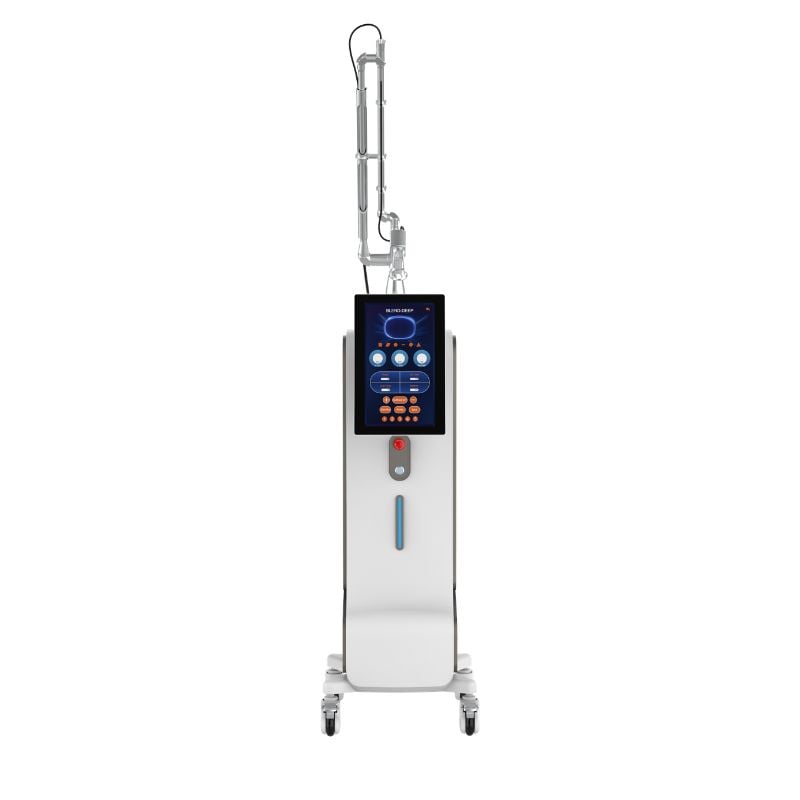
The fractional co2 laser technology creates microscopic thermal zones in the skin, triggering collagen remodeling and cellular regeneration. However, the interaction between laser energy and skin tissue varies significantly based on skin type, pigmentation, and structural properties. This variation directly influences safety margins, optimal fluence settings, healing timelines, and visible improvements in texture, scars, pigmentation, and fine lines.
Melanin is the primary chromophore in skin, meaning it absorbs laser energy across multiple wavelengths. In patients with higher skin phototypes and darker complexions, melanin concentration in the epidermis and dermis is significantly higher. When co2 fractional resurfacing energy strikes the skin, melanin absorbs more of that energy before it reaches deeper dermal layers. This creates two competing effects: increased surface thermal impact and reduced penetration depth for collagen remodeling.
Lighter skin types with lower melanin content allow fractional laser treatment energy to penetrate more deeply and uniformly into the dermis with less surface absorption. This results in more efficient collagen remodeling and faster visible improvement in fine lines, texture, and scars. Conversely, darker skin types require lower energy settings to avoid excessive epidermal heating, which limits the depth of thermal injury and collagen stimulation. This trade-off explains why fractional laser treatment outcomes differ significantly between skin types even when using identical laser technology and treatment protocols.
Post-inflammatory hyperpigmentation (PIH) is a critical complication risk that increases dramatically in darker skin phototypes. After fractional laser treatment, melanocytes in surrounding tissue respond to thermal injury by increasing melanin production. In skin remodeling laser applications on darker skin, this response is often more pronounced and longer-lasting. Practitioners must reduce fluence and spot size to lower surface temperatures, which also reduces the intensity of collagen remodeling benefits. This limitation is not present in lighter skin types, where PIH risk is negligible and practitioners can use higher energy settings safely.
Skin thickness is not uniform across populations or ethnicities. East Asian, African, and Mediterranean populations tend to have thicker dermis compared to Northern European populations. When fractional CO2 laser treatments are applied, thicker skin requires higher fluence to achieve the same depth of collagen necrosis and remodeling. Thinner skin may show more dramatic surface effects and faster visible results with lower settings. A skin remodeling laser treatment that produces optimal results on thin skin may cause excessive surface ablation on thick skin, while lower settings on thick skin may prove insufficient for meaningful collagen remodeling.
Additionally, sebaceous gland density varies significantly across skin types and anatomical locations. Thicker skin with denser sebaceous glands shows different healing patterns after co2 fractional resurfacing. Oil production during recovery can trap debris and delay epithelialization, extending downtime and influencing final appearance. Practitioners adjusting fractional laser treatment protocols must account for these structural variations to balance efficacy against safety and recovery predictability.
The three-dimensional architecture of dermal collagen varies between skin types. Some skin types display tighter, more organized collagen bundles, while others have more loosely organized structures. The degree of baseline sun damage, scarring, and prior aesthetic treatments also influences collagen condition. When fractional CO2 laser energy triggers collagen remodeling, the existing collagen architecture determines how effectively new collagen organizes and how visible the tightening effect becomes. Skin with organized collagen structure typically shows more dramatic lifting and tightening improvements after treatment compared to skin with disorganized baseline collagen architecture.
The cumulative effect of sun exposure, environmental stress, and aging differs markedly between individuals and skin types. Darker skin phototypes have natural protection from ultraviolet radiation due to higher melanin content, resulting in less photodamage on average. Lighter skin types accumulate photodamage more rapidly and extensively. When fractional laser treatment is applied to heavily photodamaged skin, the ablation and thermal injury remove compromised tissue and stimulate regeneration with healthier collagen. Skin with minimal baseline damage may show less dramatic visual improvement because there is less damaged tissue to remove and replace.
Darker skin types with less accumulated photodamage may show subtle results from co2 fractional resurfacing because the treatment is working on structurally healthier skin. This does not mean the fractional CO2 laser is ineffective; rather, the visible improvement window is narrower because less pathological change is present. Conversely, heavily photodamaged lighter skin shows dramatic improvement because the contrast between damaged and regenerated tissue is stark.
Younger patients across all skin types typically show faster healing and more robust collagen remodeling responses after fractional laser treatment. Older patients have slower fibroblast activity, reduced growth factor production, and diminished skin barrier function. These age-related changes interact unpredictably with skin type. An older patient with darker skin phototype may experience slower collagen remodeling but lower risk of PIH. An older patient with lighter skin may show faster visible results but require longer downtime for surface healing. Age-adjusted treatment protocols, lower fluence for older patients, and extended recovery guidance are necessary across all skin types but must be individualized based on the specific combination of age, skin type, and baseline condition.
Optimal fractional CO2 laser settings depend on balancing efficacy against safety for each individual skin type. Lighter skin types tolerate higher fluence, typically 60–100 mJ per microbeam, with acceptable safety margins. Darker skin phototypes require conservative settings, typically 30–50 mJ per microbeam, to minimize epidermal heating and PIH risk. These energy reductions are not arbitrary; they reflect the fundamental physics of melanin absorption and the biological tolerance of melanocyte-rich skin. Practitioners using fractional laser treatment must recognize that lower settings on darker skin still achieve meaningful skin remodeling laser benefits, but the timeline and visible progression differ from lighter skin.
Recovery from co2 fractional resurfacing varies significantly by skin type. Lighter skin typically shows erythema that resolves within 7–14 days at higher fluence settings. Darker skin types may show prolonged erythema lasting 2–4 weeks even at lower fluence, and PIH can persist for months. Setting realistic patient expectations about downtime, visible timeline, and risk profile requires honest communication about how skin type influences outcomes. Patients with darker skin phototypes should understand that fractional laser treatment efficacy is not diminished; the recovery pattern and risk profile are simply different. Multiple treatment sessions spaced 4–8 weeks apart may yield more predictable, safer results on darker skin compared to aggressive single-treatment protocols.
Melanin absorption, baseline photodamage levels, and post-inflammatory hyperpigmentation risk create fundamentally different treatment dynamics. Darker skin requires lower energy settings to avoid excessive epidermal heating and PIH complications, which naturally reduces collagen remodeling depth compared to lighter skin. Additionally, darker skin types typically have less photodamage, so the visible improvement window is narrower. The fractional CO2 laser is equally effective at stimulating collagen remodeling across all skin types, but the energy parameters, recovery timeline, and visible results profile differ significantly.
Yes, co2 fractional resurfacing can be safely applied to all skin phototypes when treatment parameters are appropriately adjusted. The key is conservative energy settings, proper melanin assessment, and realistic outcome expectations for darker skin types. Practitioner experience, patient selection, and individualized protocol design are critical for safety. Patients with darker skin benefit from lower fluence, longer spacing between treatments, and careful post-treatment care to minimize hyperpigmentation. When these adjustments are implemented, complication rates remain acceptable across all skin phototypes.
Skin remodeling laser treatments for scars require adequate dermal collagen remodeling, which is achieved more efficiently at higher fluence settings. Lighter skin types can tolerate these higher settings safely, resulting in more dramatic scar improvement per treatment session. Darker skin types require lower settings, necessitating more sessions to achieve comparable scar improvement. However, final outcomes can be equally successful; the treatment timeline and session frequency simply differ based on safety constraints imposed by melanin content and PIH risk, not fundamental laser effectiveness.

